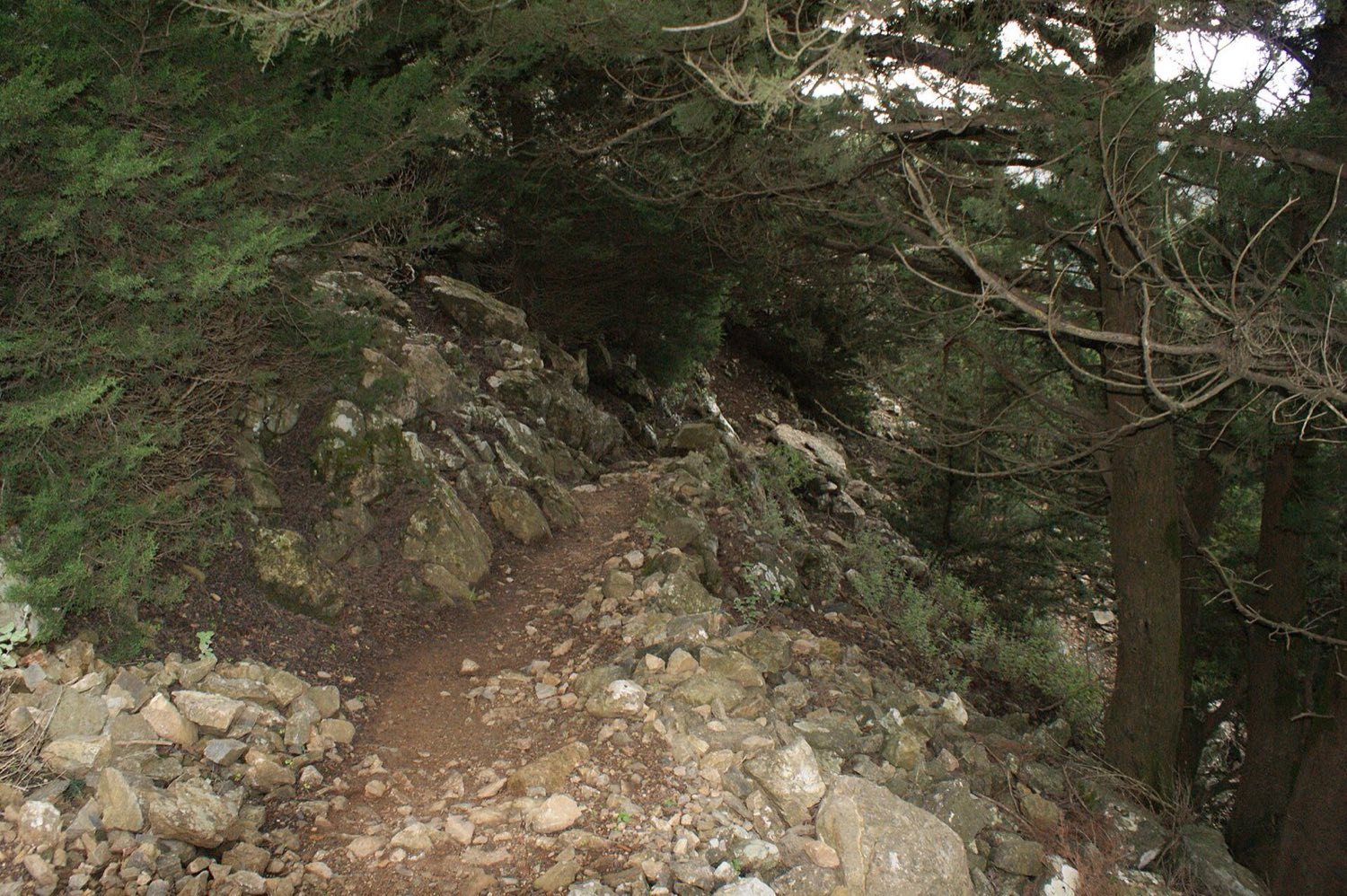
Stony hiking path climbing the slopes of Mount Dikeos on Kos
Mount Dikeos · Plaka Forest · Alikes wetland

Kos Nature, Hiking and the Peacock Forest

Kos nature comes in three pieces: a pine forest full of free-roaming peacocks, an 846 m ridge you can walk up from Zia, and a salt lake that fills with flamingos in the cool months. None of it needs a ticket. All of it needs water and the right hour of the day.

846 m
Mount Dikeos summit
Free
Plaka Forest, no gate
2–3 h
Zia to the summit
Mar–May
Wildflowers and birds

Bookable now

Guided trips that reach the Kos interior

What you're seeing: live departures from GetYourGuide for the tours that go inland or up the mountain. The forest, the ridge and the salt lake are all free to visit on your own.

Powered by GetYourGuide

Quick summary

Kos nature at a glance

No entrance desks, no opening hours, and no shade for most of the day. That combination is what makes timing the whole game here.

Distances and elevations from published mapping; walking times are our estimates for an unhurried adult and vary with route and fitness.
Cost Free. Plaka Forest, the Dikeos paths and the Alikes lakeside are all open access. Bike hire is the only real expense.
Opening hours Daylight. Nothing is gated, but do not start a mountain walk late — there is no lighting and the path is stony.
Advance booking Not needed. Only guided tours and high-season bike hire are worth reserving.
Time to allow Plaka Forest 1 h · Alikes birdwatching 1–2 h · Zia to the Dikeos summit and back 4–5 h.
Mount Dikeos 846 m, the island's high point. Zia sits well up the slope already, so the climb is the upper half of the mountain.
Water to carry 2–3 litres per person for the summit walk in summer. There is no reliable tap on the route.
When not to go up 11:00–17:00, June to September. The upper slope is unshaded. Start at first light or leave it for spring.
Best months March to May for wildflowers and birds, October to November for walking without the heat.
Wildlife you will actually see Peacocks, flamingos and waders in the cool months, lizards, tortoises, birds of prey over the farmland. No large mammals.

Elevations are from published mapping; walking times are estimates, not a guarantee. How we source numbers.

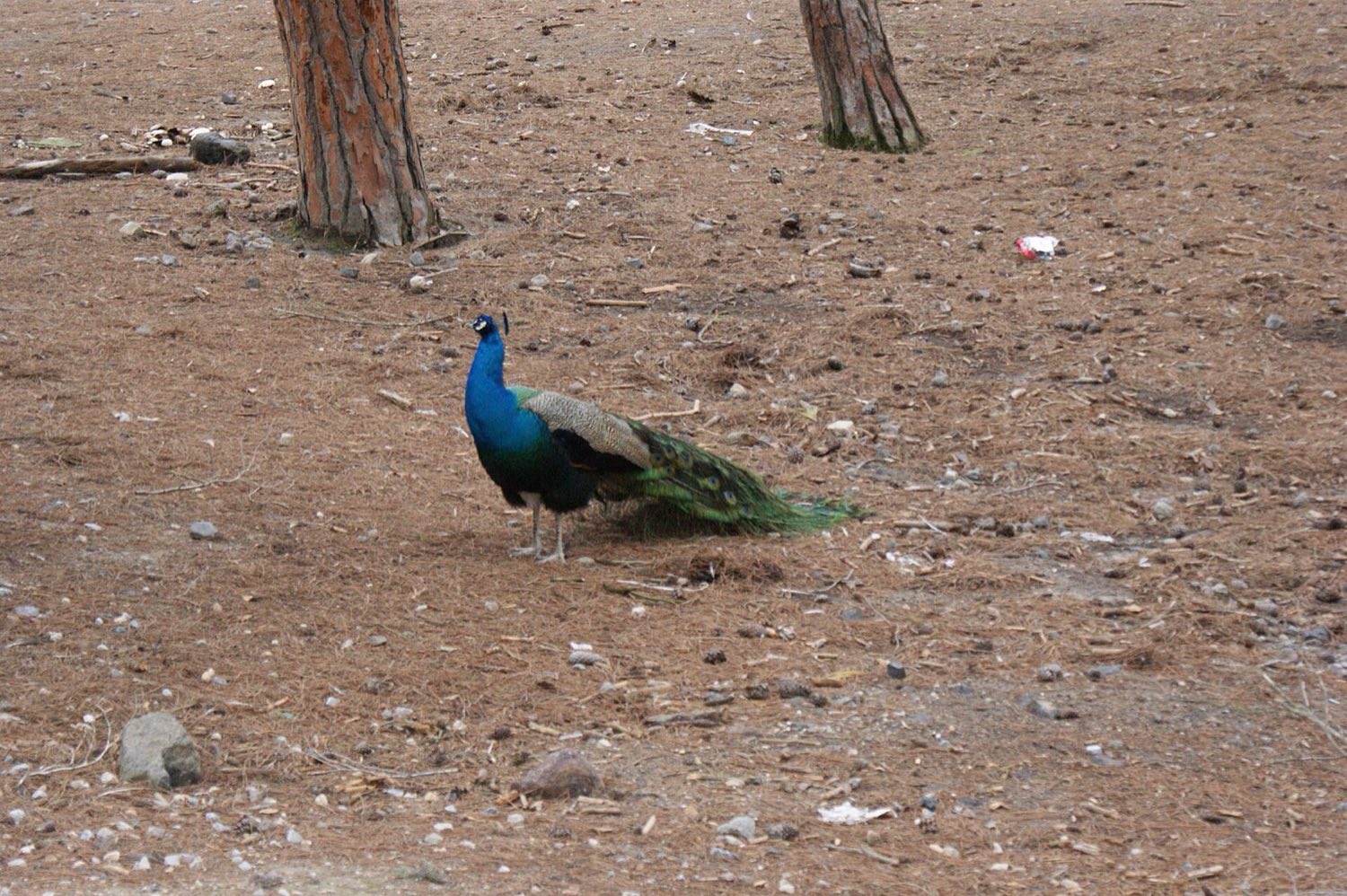
Peacock roaming free among the pines of Plaka Forest on Kos
Plaka Forest, inland of the airport: shade, pines and peacocks that walk up to your car. Do not feed them.

Do not climb Dikeos at midday in summer

The upper slope has no shade, no water and no easy escape, and July afternoons on Kos are genuinely dangerous for an unacclimatised walker. Start at first light and be off the top by mid-morning, or wait for spring and autumn. There is no shame in turning round at the chapel — the view from there is most of the view.

Ways to get out there

Bike, boots or engine: how to reach the wild parts of Kos

There is nothing to buy a ticket for, so the decision is how you travel. These three cover almost every visitor, and they are not equally good.

Best on this island

Option 1

By bicycle

€6–15 / day, hire in town


  • The north coast is genuinely flat
  • Separated cycle lanes out of Kos Town
  • Reaches Alikes, Tigaki and the farmland edges
  • No parking problem anywhere
  • Too hot for long rides after 11:00 in July

Pick this if you are based near Kos Town. Cycling is the best nature activity on Kos, and almost free.

Option 2

On foot from Zia

Free plus the ride to Zia


  • The only way to the 846 m summit
  • Ridge views over two coasts and Turkey
  • Palio Pyli ruins on the same range
  • Stony, unshaded, 4–5 hours return
  • Unwise between 11:00 and 17:00 in summer

Pick this if you walk regularly at home and can start early. Not one for small children.

Option 3

Hire car or guided off-road tour

€30–110 / day or per person


  • Plaka, Alikes and Zia in one morning
  • Air conditioning between stops
  • A guide finds the tracks for you
  • You see the interior through glass
  • Guided routes will not include the summit walk

Pick this if you are short of days, travelling with older relatives, or staying at the far end of the island.

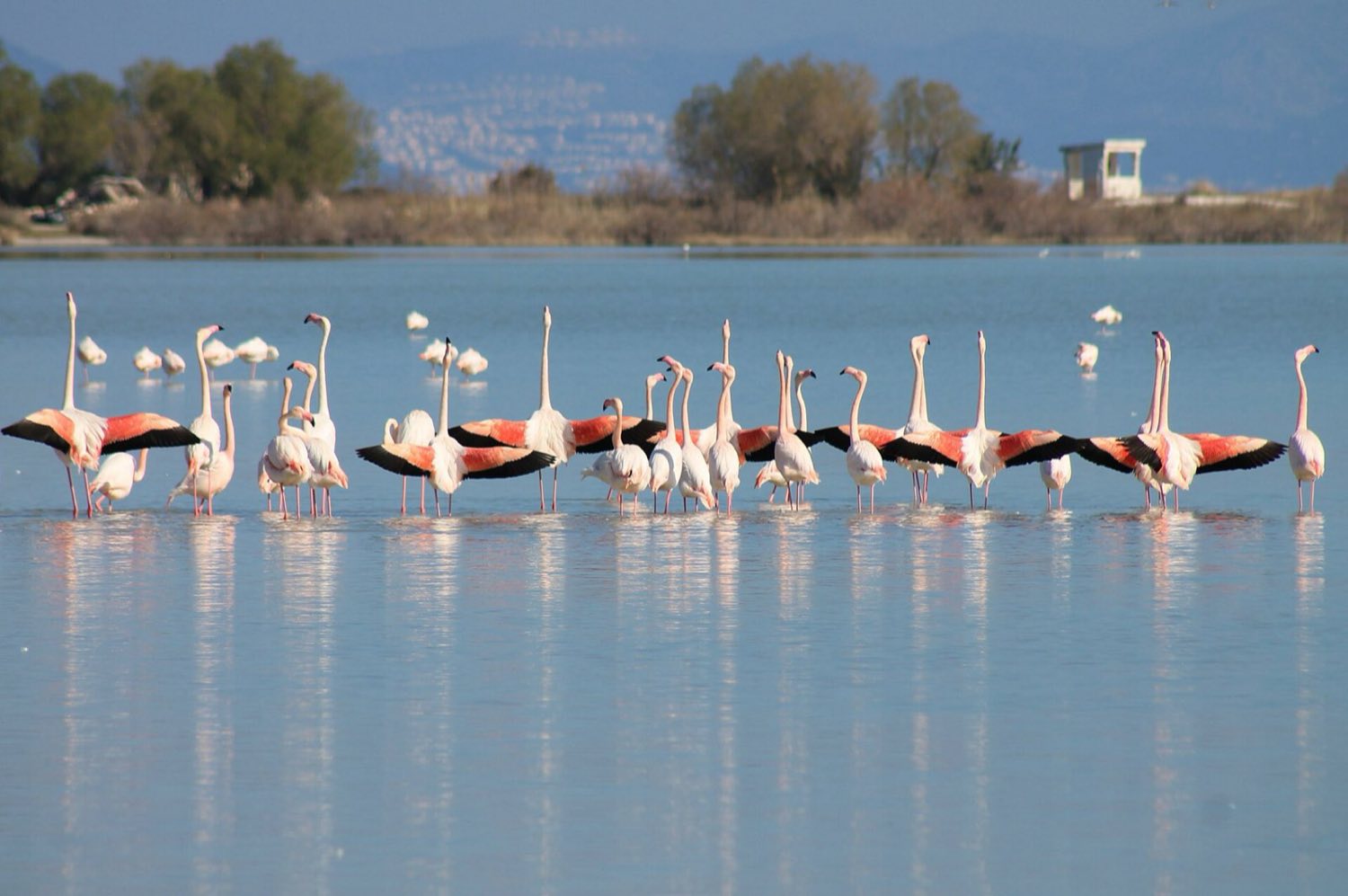
Flamingos wading in the shallow Alikes salt lake near Tigaki on Kos
Alikes, behind Tigaki: a seasonal salt lake that fills with flamingos and waders from autumn through spring.

The three places worth the trip

Where Kos nature actually is

Plaka Forest and its peacocks

A patch of pine and eucalyptus just inland of the airport at Antimachia, with a rough track through it and peacocks living wild among the trees. Shaded, flat, free, about an hour. Drive at walking pace: birds and cats cross constantly.

Do not feed them, whatever other people are doing. Bread and crisps are bad for the birds, and the tamer they get the more likely one is hit by a car.

Mount Dikeos and Palio Pyli

The ridge behind Kos Town rises to 846 m, the island's high point. Zia is already well up the northern slope, so you climb the top half of a mountain rather than all of it. Expect a stony path, loose sections and a chapel near the summit with the north coast and Turkey laid out below.

On the same range, the abandoned Byzantine village of Palio Pyli sits below its ruined castle — roofless houses, cisterns and churches above Pyli. Shorter and easier than the summit, and the better choice for half a morning. Combine either with sunset at Zia.

The Alikes wetland

Behind Tigaki on the north coast, Alikes is a shallow seasonal salt lake. Winter rain fills it and summer shrinks it, which is why the birds are a cool-season event: flamingos in winter and spring, plus egrets, herons, stilts and waders. By August it is a cracked white pan.

Watch from the track and boardwalk with binoculars. It is protected wetland, and one person striding across the mud clears the lake for everyone. Pair it with Embros Therma for a full free day.

Timing

Spring green, August straw

Best months

March to early May is the season for anyone who came for the landscape: poppies and orchids on the terraces, the ridge green, the lake full and the birds on it. October and November are the other window — walkable temperatures and the first rain softening the ground.

July and August are the opposite: straw hillsides, dry streambeds, and a lake that may be a salt crust. That is the island's normal cycle, not a drought — but do not plan a summer holiday around wildflowers.

Best hours

First light to about 10:00, then late afternoon to dusk. Between roughly 11:00 and 17:00, June to September, the interior is a bad place to be on foot, and that is when most visitors get into difficulty.

The meltemi, up high

The meltemi north wind that builds through summer afternoons and peaks in July and August is a mixed blessing on the ridge: cooling, but strong enough on exposed sections to make footing awkward. It is also why a windy beach day is often a good walking day in spring or autumn.

Best light for photographs

The Alikes lake at sunrise, flamingos backlit and the water flat. On the ridge, the last hour before sunset puts the coastline in relief, with the north-coast beach strip visible from Kos Town to Mastichari.

Snakes: sensible, not scared

There are snakes on Kos and most are harmless, but Greece has venomous vipers, so assume any snake might be one. Wear boots in scrub, look before you put a hand on a warm rock, and step back if you meet one — nearly every bite involves somebody trying to move or photograph the animal.

Water is scarce here

Kos has no real rivers and draws its supply from groundwater, while its summer population is many times the winter one. Tap water in some resorts is brackish enough that locals drink bottled. Carry a refillable bottle and fill it where the water is good.

Practical access

Finding the trailheads without a guide

None of these has a visitor centre, and two have no sign worth the name. Here is what to aim for.

  • Dikeos from Zia: drive to the very top of the village, above the last tavernas, and park. The path continues uphill where the road stops — if the turning is not obvious, ask in the village, where locals point walkers up it all summer.
  • Palio Pyli: approach from Pyli on the inland road, not from Zia. The last stretch is a narrow lane, and the ruins are above the parking area up a steep stepped path.
  • Plaka Forest: the turning is off the road between Antimachia and the airport. Keep to the main track — the side spurs are soft.
  • Alikes: come at it from the Tigaki end, where the lakeside track and the boardwalk give a view without disturbing anything.
  • Footwear: trainers for the forest and the lake, boots or stiff soles for the ridge. Flip-flops on the Dikeos path are how ankles get broken.
  • Leave no trace: no bins, no staff, no running water at any of them. Carry your rubbish out, do not pick the wildflowers, and keep dogs on a lead near the lake.

Insider: go at either end of the day

Peacocks are most visible in the last hour of daylight, when they come down to roost, and the Alikes birds are calmest and best lit in the first hour after sunrise. Midday is the worst of every world: hot, bright, and the wildlife hiding.

How to save

The cheapest good days on Kos

Everything here is already free

No site on this page charges admission, and there is no island-wide nature or sightseeing pass on Kos to buy. Any bundle is an operator package — price it against its parts. The only real costs are transport and water.

Bike beats bus beats car

A day's bike hire costs about what two bus fares do, and on the flat north coast it is often faster door to door. Kos Town's separated lanes run out towards Lambi and Psalidi, and the Tigaki road is level all the way to the salt lake.

Child, student and senior reductions

There is nothing to reduce — no gate, no ticket. Discounts exist on bike and car hire by the week and on guided tours, which usually publish a child rate. Bring ID if you expect a student or senior rate.

Build a free day

Plaka Forest in the morning, the Alikes boardwalk on the way back, a public beach at midday and Embros Therma at dusk — a genuinely good day out for the cost of getting between the four. The things to do hub has more of the same, and the boat trip guide covers the paid half of the island.

How to get there

Reaching the forest, the lake and the mountain

Two of the three are easy without a car. The mountain is the one that needs planning, because the bus does not go where the path starts.

  1. Alikes and Tigaki by bike or bus

    Tigaki is about 12 km west of Kos Town on flat road, served by KTEL buses and reachable by bike in under an hour. The lakeside track runs behind the beach — turn inland at Tigaki.

  2. Plaka Forest by car or taxi

    Realistically a driving stop, roughly 30–35 minutes from Kos Town, on the road between Antimachia and the airport. On a late departure day it is the best way to spend your last two hours.

  3. Zia and the Dikeos path

    Zia is 20–25 minutes from Kos Town by car and served by excursion coaches rather than a useful early bus, so a dawn start needs a car or a taxi. Park at the top, not in the tavernas' spaces.

  4. Arriving from the airport

    The airport sits mid-island at Antimachia, roughly 24 km from Kos Town, which puts Plaka Forest almost on your route in. Sort the transfer first and save the walks for a day without luggage.

Context

Why the island looks the way it does

Kos is a long, low island in the Dodecanese with one mountain: the limestone ridge of Mount Dikeos, 846 m at the top, along the eastern third. West of it the land flattens into the farmed plain around Antimachia, then rises into the dry hills of Kefalos. That single ridge explains most of the island's ecology, because it catches what rain there is.

Water is the constraint on everything here. There are no permanent rivers, the streambeds run dry by May, and Alikes exists because seawater and winter rainfall collect in a shallow basin behind the dunes. The lake and the Dikeos range are both recognised as protected habitat under the European Natura 2000 network — hence the signs asking you to keep to tracks.

The peacocks at Plaka are not native — Indian peafowl are an introduced population thriving in a pine plantation with no predators worth the name. That sets expectations for the rest of the island's wildlife: there is no big fauna here. What you get is birds, reptiles, insects and, in spring, a startling density of wildflowers.

The human landscape is as old as the natural one. Terraced olive groves, dry-stone walls and the ruins of Palio Pyli all sit inside what looks like wild hillside, and the Asklepion above Kos Town was built where the pines and the springs were. Walking here, you are mostly walking through very old farmland — start from Kos Town for the archaeology on the same day.

FAQ

Kos nature and hiking: common questions

Can you hike up Mount Dikeos on Kos?

Yes. The usual route starts at the top of Zia and climbs the ridge to the 846 m summit, with a chapel near the top. Allow two to three hours up and most of two hours down, carry two to three litres of water each, and expect a rough stony path rather than a graded trail.

Is Plaka Forest on Kos free to visit?

Yes. Plaka Forest sits just inland of the airport at Antimachia, there is no gate and no ticket, and the peacocks wander freely between the pines. Drive in slowly, because birds and cats cross the track, and do not feed them however many other visitors are doing it.

When can you see flamingos at the Alikes salt lake?

Winter and spring are the reliable months, with the birds thinning out as the lake shrinks and often gone altogether in August. Early morning gives the calmest water and the best light. Bring binoculars and watch from the track rather than walking out onto the mud.

What is the best nature activity on Kos?

Cycling. The north coast is genuinely flat and Kos Town has extensive separated cycle lanes, so you can reach the Alikes wetland, the beaches and the farmland edges without a car or a bus timetable. Walking the Dikeos ridge is the bigger day out, but a serious effort in summer heat.

Are there snakes on Kos, and are they dangerous?

There are snakes, most of them harmless, and Greece does have venomous vipers. Bites are rare and almost always the result of someone handling or cornering the animal. Wear boots in scrub, look before you put a hand on a warm rock, and step back rather than closer.

When is Kos greenest?

March to early May. Winter rain brings poppies and orchids to the hillsides and the olive terraces, and the Dikeos ridge stays green for weeks. By late July the same slopes are straw-coloured and the streambeds dry, which is normal here rather than drought.

What wildlife will I realistically see on Kos?

Peacocks at Plaka, flamingos and waders at Alikes in the cooler months, lizards, tortoises on quiet tracks, kestrels over the farmland and loud cicadas everywhere in summer. There are no large mammals to look for, so aim your expectations at birds, reptiles and insects.

Want the Kos interior without the logistics?

The forest, the ridge and the salt lake are free and open. If you would rather someone else drove, check the guided nature and adventure trips on GetYourGuide — the authorised reseller we link to throughout this guide.