Context
Why there is hot water coming out of a Greek island
Kos sits at the eastern end of the South Aegean volcanic arc, the curve of
volcanic activity running through Methana, Milos and Santorini that surfaces most obviously at
Nisyros, the active volcano visible to the south. Kos is not a
live volcano, but it is on the same restless ground. Rainwater sinks through fractured rock, is
heated at depth, picks up dissolved minerals and sulphur compounds, and returns to the surface
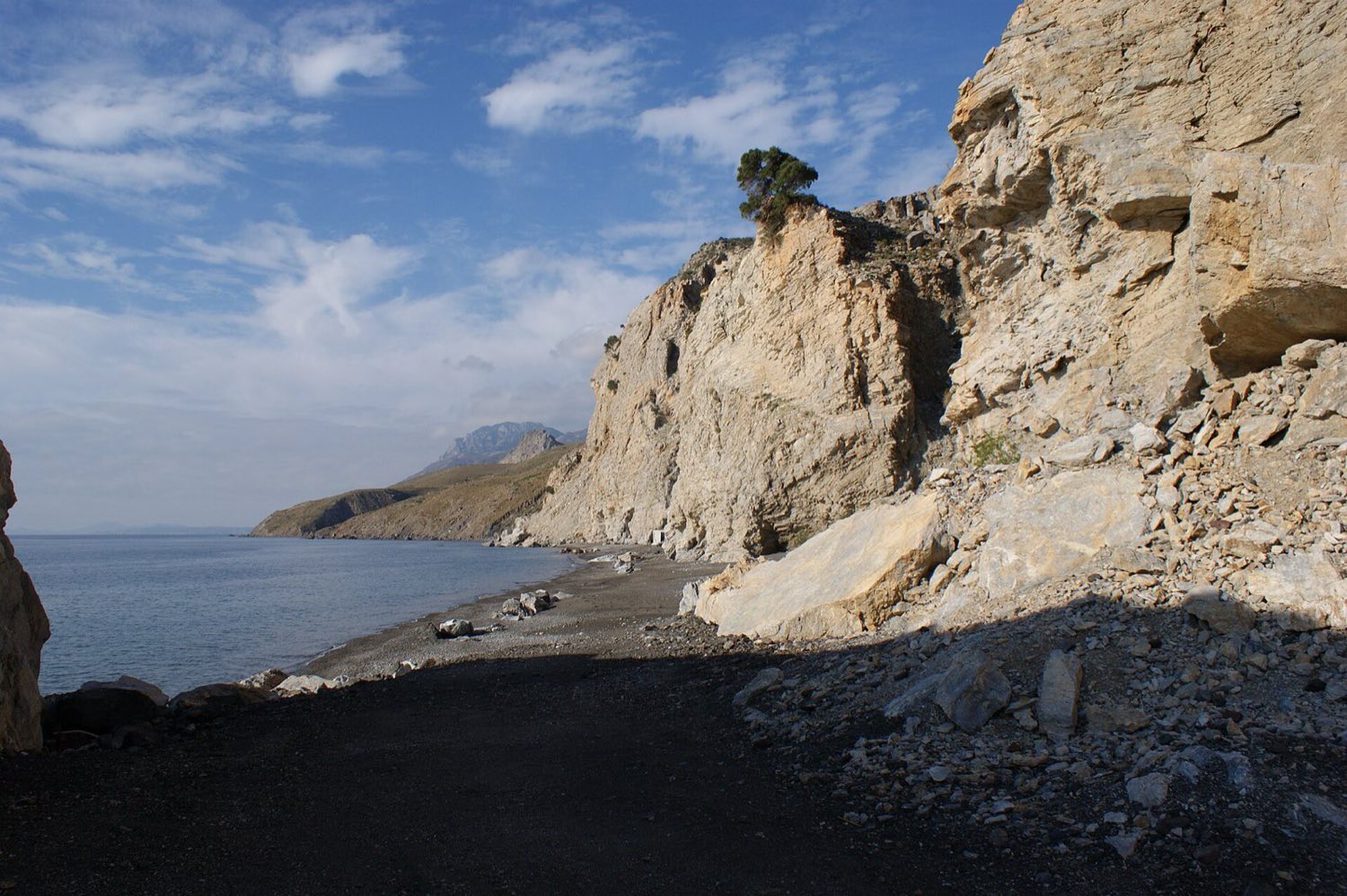
along faults. Embros Therma is one of those exits, and it happens to emerge a few metres from
the sea.
The smell that hits you on the steps is hydrogen sulphide coming out of solution — the same
chemistry as the vents inside the Stefanos crater on Nisyros, at a far gentler scale. It is
also what tarnishes silver: the sulphide reacts with the metal and leaves it black. Harmless to
you, irritating for your jewellery.
People have taken this seriously for a long time. Therapeutic bathing was standard in ancient
medical practice, and the island whose sanctuary above Kos Town prescribed washing, diet and
rest was never going to ignore a hot spring on its own coast — the
Asklepion and Therma belong to the same tradition. Treat modern
claims about mineral waters curing specific conditions with caution, but hot water, salt air
and twenty minutes of doing nothing make their own case.
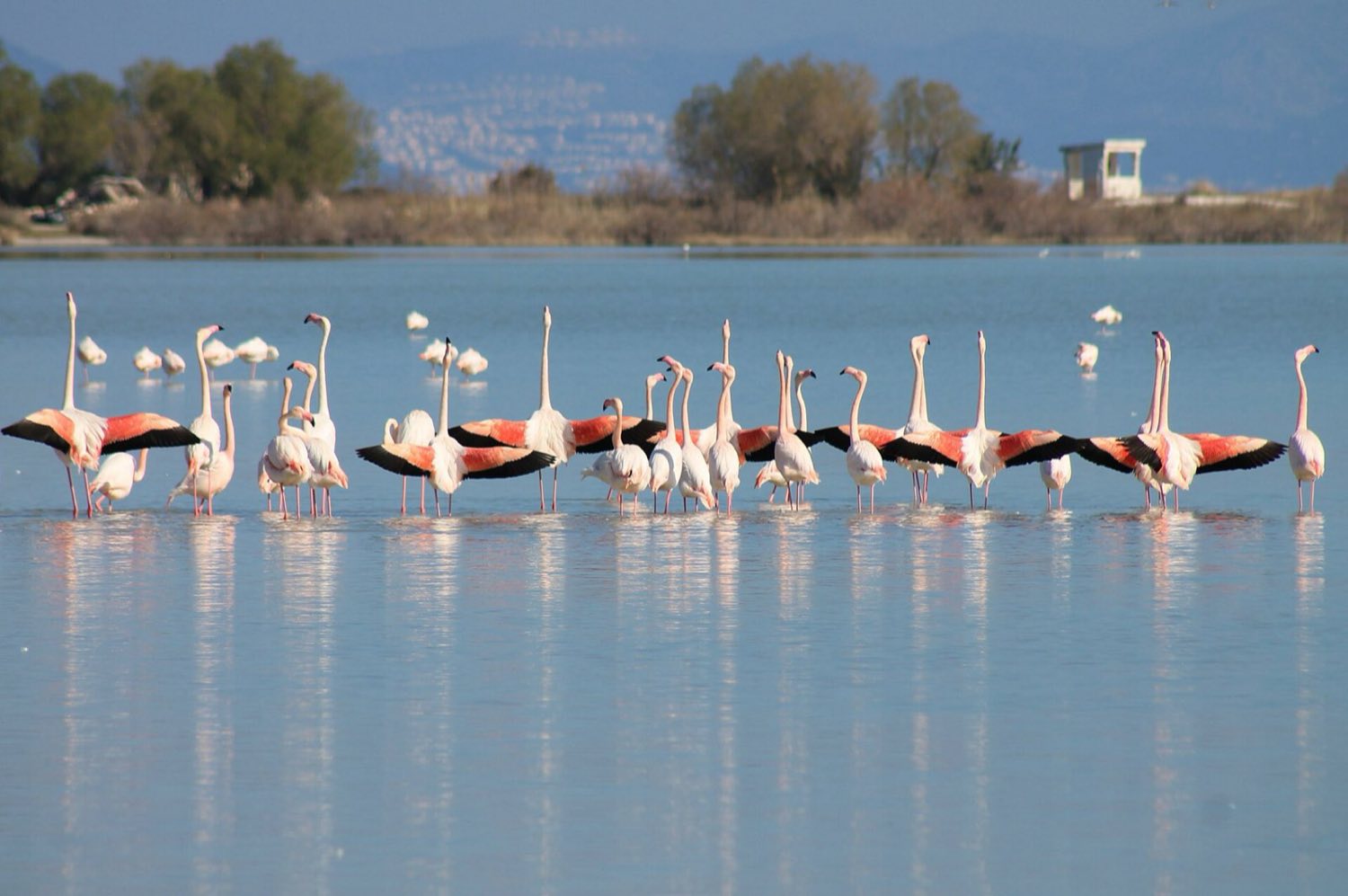
Alikes is the same island working quietly. A sandbar closes off a shallow basin, evaporation
concentrates what seeps in, and the resulting brackish flats become one of the few wetlands in
this part of the Aegean where migrating birds can reliably feed. Salt was harvested here
historically; the value now is ecological, and it is why flamingos wintering in the Dodecanese
stop on Kos at all.
Both places survive because they were never developed, and that is fragile. There are no bins
at the springs, no warden at the lake and no budget behind either. Take your bottles home, keep
to the boardwalk, never use soap or shampoo in a pool that drains into the sea, and leave the
stones where they are. More of the island's no-cost highlights are on the
things to do on Kos hub.