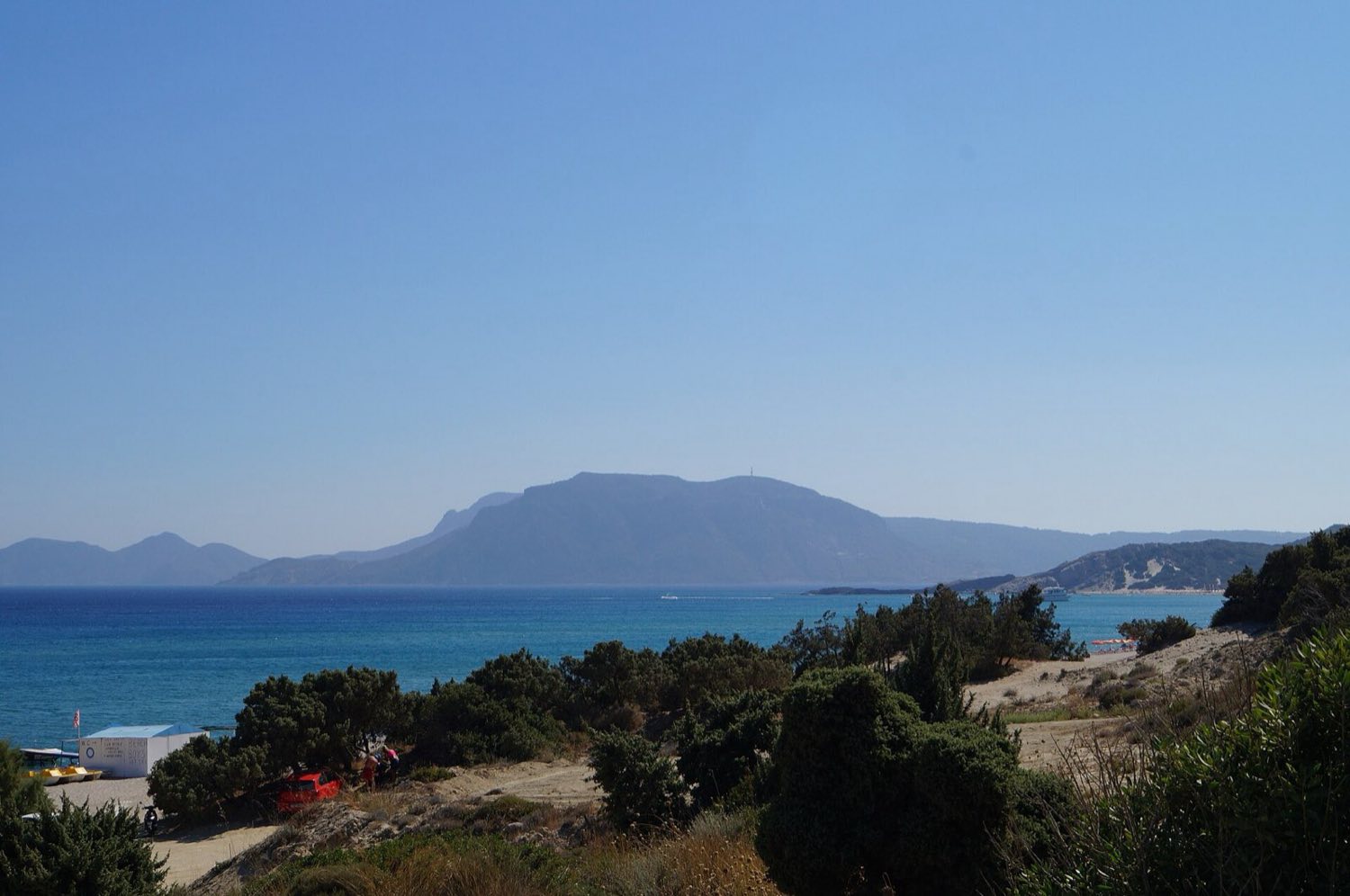
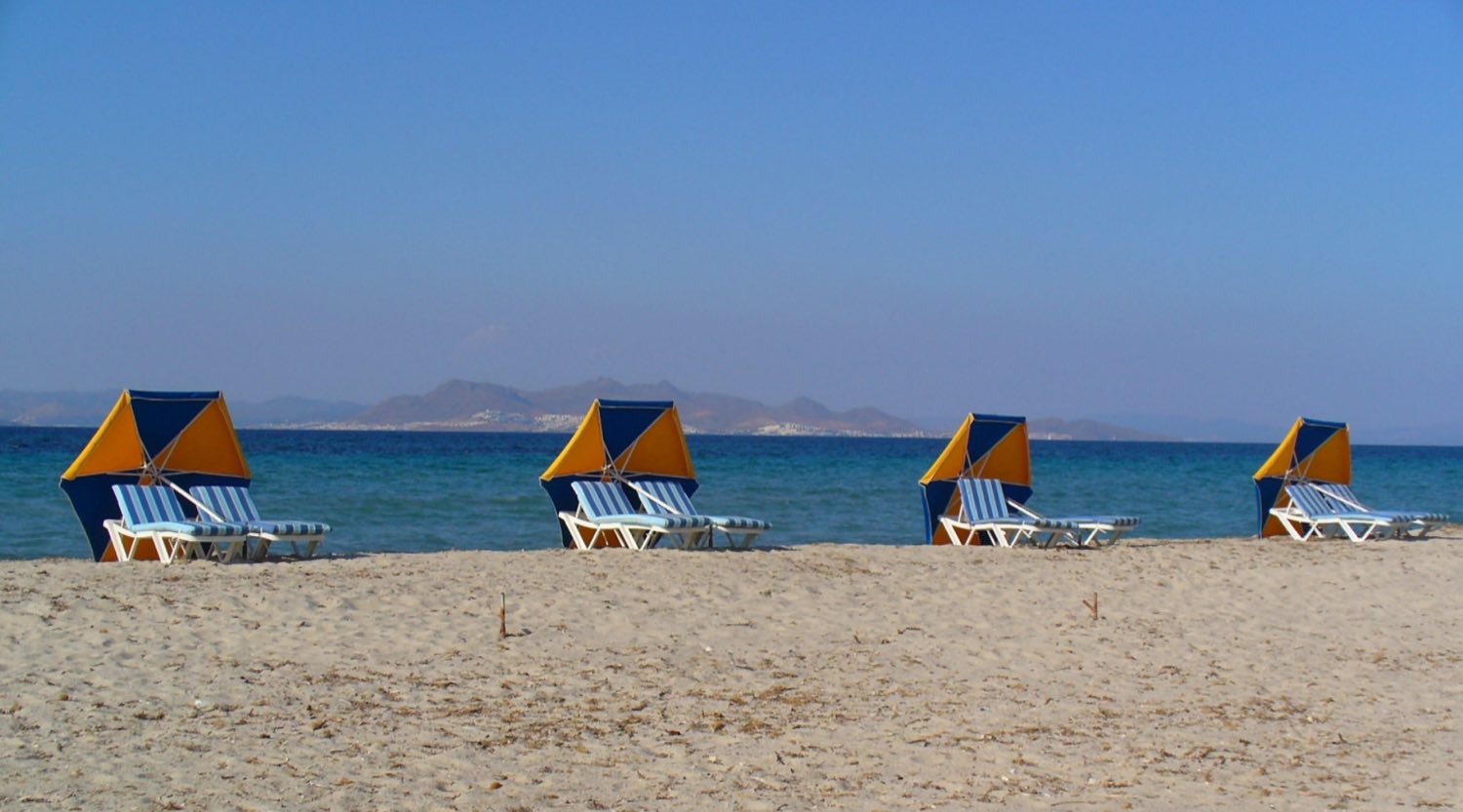
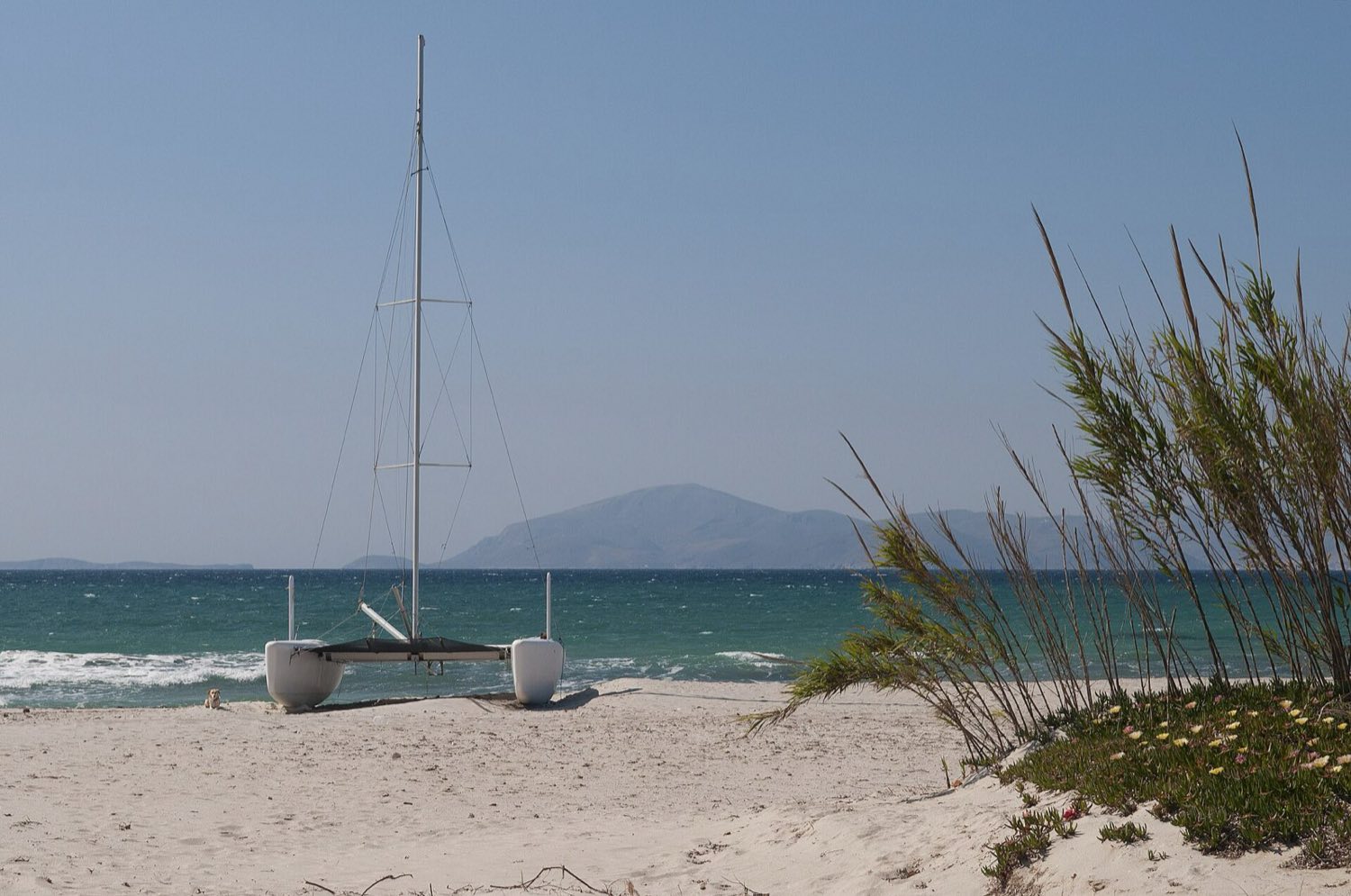
Fine golden sand and shallow turquoise water at Paradise Beach in Kefalos Bay, Kos
Kos · Dodecanese · 10 beaches compared

Kos Beaches: Which One, and When

Kos has roughly 40 km of swimmable coast facing four different directions, and that is the whole trick — the north coast takes the summer wind head-on while the south and west bays stay flat. Compare all ten main beaches below by sand, shade, depth and crowds, then read the wind before you choose.

10
Main beaches compared
N–NNW
Meltemi wind direction
45 min
Kos Town to Kefalos
May–Oct
Swimming season

Bookable now

Beach transfers, boat trips and watersports on Kos

What you're seeing: real departures for the coming weeks, pulled from GetYourGuide. Beach transfers and boat days are the two ways to reach a beach without a hire car — sort by duration or price, then open the listing for the operator's own terms.

Powered by GetYourGuide

Quick summary

Kos beaches at a glance

The questions people ask before they commit a day to a beach, answered in one block. Sunbed prices are set by individual concessions and move with the season, so treat every figure below as a band rather than a tariff.

Compiled from operator listings on GetYourGuide and from beach-concession practice on Kos; confirm on the day.
Sunbeds from Commonly €10–20 for two beds and an umbrella at an organised beach; some bars give you the set free if you order food and drinks.
Cost to swim Nothing. Every beach on Kos is public. You pay for the furniture, not the sand or the water.
When beach bars run Roughly 09:00 to sunset from May to October. Outside the season most south-coast bays have no facilities at all.
Advance booking needed? No for the beach itself. Yes for a Paradise/Bubble Beach return transfer or a watersports slot in July–August.
Time to allow Lambi or Psalidi 2–3 hours · Tigaki or Marmari half a day · Kefalos Bay, Paradise or Limnionas a full day — the drive alone is 90 minutes return.
Shallowest for small children Tigaki, Marmari and Mastichari on the north coast. You can wade a long way before it reaches an adult's waist.
Calmest when it's windy Kefalos Bay, Agios Stefanos and Limnionas in the west and south — sheltered from the northerly meltemi.
Best for windsurf and kite Marmari, Tigaki, Mastichari and Psalidi. Same wind that spoils a lazy swim makes these four reliable.
Lifeguards Assume none unless you can see one. Cover is patchy and seasonal, and most bays have no cover at all.
Long shallow sandy shoreline at Tigaki beach on the north coast of Kos
Tigaki: pale sand, water that stays knee-deep for a long way out — and fully exposed to the north wind.

The one rule that decides your day

Check the wind direction, not just the speed. A northerly means the north coast is choppy and the south and west bays are glassy. Reverse it for a southerly. Two minutes on a forecast app saves a wasted 45-minute drive.

Windsurfing conditions off the sandy north-coast beach at Mastichari, Kos
Mastichari on a breezy afternoon. The same wind that empties the sunbeds fills the water with sails.

The organising principle

Pick your beach by this morning's wind

Kos runs roughly east to west, so its beaches face north, east, south and west. The dominant summer wind — the meltemi — comes down the Aegean from the north or north-north-west, builds through the afternoon and peaks in July and August. That single fact sorts the whole island's coastline into two groups.

North coast: exposed, and better for it if you sail

Lambi, Tigaki, Marmari and Mastichari take the meltemi straight onshore. On a windy day the water is chopped up, the shallows go cloudy with stirred sand, and loose towels end up two rows downwind. That is also why the windsurf and kite schools are all here: onshore wind over waist-deep sand is the safest place in the Aegean to learn, because anything that goes wrong blows you back to the beach.

East side: windier than it looks

Psalidi and the stretch out towards Agios Fokas sit in the channel between Kos and the Turkish peninsula, and the wind funnels through it. Locals rate Psalidi for board sports for exactly that reason. If you want to float on your back, go elsewhere.

South and west: the windy-day answer

The bays along the Kefalos peninsula — Paradise and Bubble Beach, the string of small bays above them, Agios Stefanos and Kamari, and Limnionas on the west side — sit behind the island's hills. When the north coast is white, these are usually calm. Not always glassy: the wind funnels over the low saddle near Antimachia and lands in gusts on the south coast, so expect a breeze, just not a swell.

Why calm water on the south coast is the riskier one

On the south and west coasts a northerly blows off the land. The surface looks inviting because the wind is flattening it — and that same wind will take an inflatable, a paddleboard or a small child on a ring straight out to sea. Leave the lilos in the car on those days, or use them on the north coast where the wind pushes you back in.

Best months, best hours

  • Late May to mid-June — sea warm enough for most people, beaches half empty, sunbeds easy to get, wind not yet at full strength.
  • July–August — hottest air, strongest meltemi, every sunbed row full by 11:00. Go early or go south-west.
  • September — the best month in the water. The sea holds the summer's heat, the wind eases and the crowds thin from mid-month.
  • Early October — still swimmable, but beach bars start closing and the south-coast bays lose their facilities first.

Within the day: 08:30–11:00 is calm, cool and uncrowded everywhere; after 16:30 the coaches and boat excursions have gone and the light is worth staying for. For photographs, the Kefalos Bay beaches face broadly south-west and get the sunset; Psalidi and Therma face east and are at their best at first light.

Cruise-ship days load the town beaches — Lambi and Psalidi in particular — while Paradise fills with excursion boats and coach parties between 10:30 and 16:00. See what else happens in town on cruise days.

Side by side

All ten main Kos beaches compared

Sand or pebble, shade, how deep it gets for a four-year-old, whether there is anything to eat, and how long it takes to reach. Scroll the table sideways on a phone.

Surface, depth and crowd notes are our own observations of typical high-season conditions; facilities change year to year.
Beach Coast Surface Shade Depth for small children Watersports Crowds Food on site Getting there
Paradise / Bubble Beach South (Kefalos Bay) Fine pale sand Hired umbrellas only Gentle shelf close in, then drops Jet ski, banana, parasail Very high 10:30–16:00 Beach bars on the sand Island bus to Kefalos, car ~45 min, or a return transfer
Kefalos Bay bays (Camel, Banana, Magic, Sunny) South Sand, coarser in places Almost none Varies bay to bay; some have a step a few metres out Little or none Moderate, empty at the edges One bar per bay, not all season Car — short steep tracks off the main road
Agios Stefanos / Kamari South-west Sand and shingle mix A few trees near the basilica ruins Deepens quickly in places Limited; good snorkelling Moderate Tavernas along the Kamari front Island bus to Kamari, car ~45 min
Limnionas West Small sand pocket plus rock None to speak of Sheltered but rocky entry — water shoes None Low, even in August Two or three fish tavernas Car or scooter only
Tigaki North Long pale sand Umbrellas; tamarisks at the edges Very shallow, a long wade out Windsurf and kite when it blows High in the centre, quiet at the west end Beach bars and tavernas Frequent bus, ~12 km, flat enough to cycle
Marmari North Sand with low dunes Umbrellas only Very shallow Windsurf and kite schools Moderate; wide free stretches either side Bars in the developed centre Bus, ~15 km by road from Kos Town
Mastichari North Sand Umbrellas; some shade at the harbour Shallow and gradual Windsurf and kite Moderate; busiest by the port Fish tavernas at the harbour Bus, ~23 km; also the Kalymnos ferry port
Lambi North (Kos Town edge) Sand and shingle mix Hotel umbrellas Shallow near the shore Some, seasonal High all season Everything within five minutes Walk or cycle from Kos Town centre
Psalidi East (the channel) Pebble and shingle Hotel umbrellas Shelves quickly — not a paddling beach Windsurf, kite; the most reliable wind Moderate Hotel bars, a few tavernas Town bus, ~4 km, easy cycle
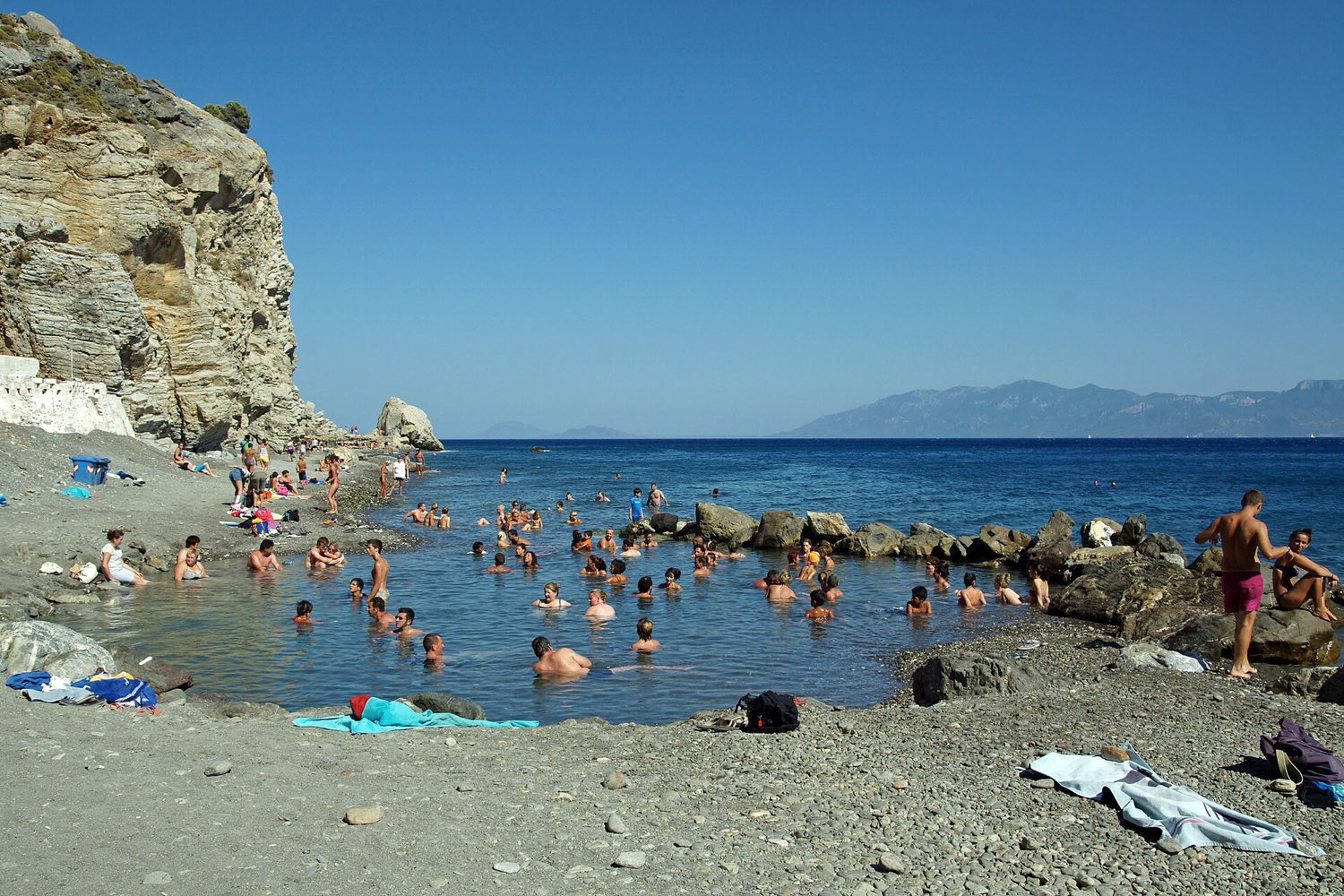
Therma (Embros Therma) South-east Pebble and rock None Not suitable — hot pool, rock, uneven footing None Quiet midday, busy at sunset Nothing on site — bring water Car or scooter, ~12 km, then steps down

Distances are road distances from Kos Town and are approximate. Sunbed availability, beach-bar opening and watersports concessions are re-tendered season by season — check on arrival. How we source and date our figures.

Pebble shoreline and clear deep water on the east coast of Kos near Agios Fokas
Psalidi — pebble, clear water, and wind through the channel.
Sand and shingle beach at Lambi on the northern edge of Kos Town
Lambi — the beach you can walk to from Kos Town.
Shallow water and pale sand along the shoreline at Tigaki, Kos
Tigaki — the shallowest water on the island.
Sandy beach and fishing harbour at Mastichari on the north coast of Kos
Mastichari — sand, a working harbour and fish tavernas.

Bus, car or transfer

Three ways to reach a Kos beach, compared

There are no tickets to compare on a Greek beach — the real decision is how you get there. Kos is 40 km long, and that length is what costs you, not the entrance fee.

Option 1

Public bus

A few euros / person each way


  • Town buses cover Lambi, Psalidi and Agios Fokas
  • Island buses run the north coast and out to Kefalos
  • Frequent to Tigaki and Marmari in season
  • Drops you at the road, not always at the sand
  • Thin service to the south-coast bays; last return is early

Pick this if you want one beach for the day and you're heading somewhere on the north coast. Check the return time before you settle in.

Best for the west

Option 2

Hire car, scooter or quad

Per vehicle, per day + fuel


  • The only way to reach Limnionas and the Kefalos Bay tracks
  • Lets you change beach when the wind changes
  • Split four ways it undercuts four bus fares
  • Roads are good; the beach access tracks are not
  • Parking at Paradise is gone by late morning in August

Pick this if you want more than one beach in a week, or you're travelling with a family and a cooler box. See quad and jeep options.

Option 3

Organised transfer or boat

Per person, return booked ahead


  • Return road transfer to Paradise and Bubble Beach
  • No driving, no parking, no map-reading
  • Boat trips reach bays with no road at all
  • Fixed pickup and return times
  • You're committed to one beach for the whole day

Pick this if Paradise Beach is the one you came for and nobody wants to drive 90 minutes return. Or take a boat day instead.

Depth, drop-offs and safety

Which Kos beaches actually work with small children

The shallow three

Tigaki, Marmari and Mastichari all shelve so gradually that a small child can walk out thirty metres and still be at knee height. That is genuinely rare, and it is the main reason families book the north coast. The trade-off is the wind: shallow water plus an onshore breeze makes small breaking waves and cloudy sand, which some toddlers love and others hate.

Where the bottom drops away

Psalidi is pebble and shelves quickly — clear water, good for adults, wrong for paddling. Agios Stefanos deepens fast in places, and several of the Kefalos Bay bays have a distinct step in the sand a few metres out where a child suddenly cannot stand. Walk the entry line yourself before you let anyone run in.

Assume no lifeguard

Cover on Kos is seasonal and patchy, and most bays have none. There is no flag system you can rely on across the island. Treat every beach as unsupervised, keep non-swimmers within arm's reach, and remember that the calm-looking south-coast water on a windy day is the one that carries floats out.

Feet, urchins and jet skis

Pack water shoes for Psalidi, Limnionas and Therma — sea urchins sit on the rocks at all three, and pebbles are hot by midday. On sandy beaches, shuffle rather than stomp in ankle-deep water; small weever fish bury themselves there and the sting is memorable. Where jet skis operate, at Paradise and in front of Tigaki's centre, stay inside the marked swimming buoys.

Shade is the thing you'll forget

Almost no Kos beach has natural shade. A hired umbrella is the only cover at Paradise, Marmari and most of Kefalos Bay, and they run out. A cheap pop-up sunshade from a supermarket in town pays for itself in two days and means you can use the free stretches instead of the sunbed rows. More heat tactics on Kos with kids.

Best beach by who you are travelling with
You are…Go to
With a toddlerTigaki or Marmari, before 11:00
With teenagersParadise Beach for watersports
Without a carLambi, Psalidi or the bus to Tigaki
Chasing calm water on a windy dayLimnionas or Agios Stefanos
A windsurfer or kiterMarmari, Mastichari or Psalidi
After somewhere near-emptyLimnionas, or the edges of Kefalos Bay
SnorkellingAgios Stefanos, Limnionas, Therma's rocks

Recommendations are editorial judgements, not measurements. Conditions change with wind, season and how recently a concession changed hands — see the snorkelling guide for entry points in detail.

How to save

Sunbeds, free stretches and what you don't have to pay for

Every beach on Kos is public. What is private is the furniture. An organised stretch is a licensed concession that rents beds and umbrellas, and the price is set locally — commonly €10–20 for two beds and a parasol, higher at the busiest south-coast bays and at hotel frontages. Many beach bars operate a softer deal: the set is free if you eat and drink there, which works out cheaper than paying twice.

Greek beach-concession rules require a proportion of every beach to be left clear of beds and a strip along the waterline to be kept open, and the rules have tightened in recent years. In practice you can always find free sand — you may just have to walk. The reliable free stretches are the western end of Tigaki towards the salt lake, the sand on either side of Marmari's developed centre, the far ends of the Kefalos Bay bays, and all of Therma, which has no concession at all.

The clear-strip and free-proportion requirements come from national beach-concession legislation rather than local practice, and enforcement varies by municipality. Check the current rules before relying on them; if a concession has blocked the waterline, the municipal authority is the body that acts.

Four ways to spend less on a beach day

  • Bring your own shade. A pop-up sunshade or a beach umbrella from a town supermarket costs about the same as one day of sunbed hire.
  • Shop before you go. Beach-bar prices are resort prices. A bakery and a supermarket in Kos Town cover lunch for a family for the price of two beach sandwiches.
  • Go free entirely. Embros Therma is a hot spring walled into the sea with no ticket desk, the Plaka forest peacocks cost nothing, and the salt lake behind Tigaki is open walking.
  • Travel in the shoulder weeks. Late May, June and the second half of September give you the same sea with fewer people and softer prices right across the island.

There is no island-wide beach or sightseeing pass on Kos, and nothing sold as one is official. Where bundles do save money, they are operator combos — a transfer plus a sunbed set, or a boat trip that includes snorkelling gear.

Naturist areas, factually

Greece permits naturism on designated and secluded beaches rather than everywhere, and Kos has no large signed naturist resort beach. Where it happens, it happens at the quiet ends of the Kefalos Bay beaches — the eastern end of Sunny Beach is the stretch usually named — and on undeveloped sand well away from hotels and beach bars. The practical rule: umbrella rows and families mean cover up; an empty stretch out of sight of a bar is where people don't. Nothing here is a licence to undress in front of anyone who would rather you didn't.

How to get there

Reaching each coast from Kos Town

Distance is the planning constraint on Kos. Everything on the north coast is a short hop; the west takes real commitment.

  1. Walk or cycle

    Lambi is on the northern edge of town and Psalidi is about 4 km east — both reachable on the flat separated cycle lanes. Tigaki at ~12 km is a comfortable ride out and a hard one back into a headwind.

  2. Town and island buses

    Local town services run to Lambi, Psalidi and Agios Fokas. Island buses head west along the north coast to Tigaki, Marmari and Mastichari and on to Kefalos and Kamari. Buy at a kiosk or on board; check the last return before you settle in.

  3. Driving west

    Kefalos and Paradise are 45 minutes from Kos Town on a good road, so budget 90 minutes of driving. Limnionas is a further few kilometres down a narrow lane below Kefalos village. Fill up before you leave town.

  4. Parking, honestly

    Paradise has a large unpaved car park that fills by late morning in August — the overflow is roadside on a blind bend, so arrive before 10:30. Tigaki and Marmari are street parking. The rough track above Therma has room for a handful of cars and steps down to the pool.

The Kefalos Bay trick

The main road along the south side of the Kefalos peninsula runs along a ridge with the bays below it. Each has its own short, steep, unsurfaced track down, and most are unsigned or signed only by a hand-painted board for the beach bar. Drive the ridge first, pick the bay with the fewest cars parked at the top, then commit. Low-clearance hire cars manage most of them in dry weather — slowly.

Context

Why Kos beaches differ so much end to end

Kos is two islands geologically stitched together. The eastern third is dominated by the limestone bulk of Mount Dikeos, 846 m and steep enough to shelter the coast below it. The western end — the Kefalos peninsula — is low, volcanic in origin and part of the same South Aegean volcanic arc that produced Nisyros offshore. That is why the sand changes character as you drive west, and why gas still fizzes up through the shallows at Bubble Beach while the pebbles at Therma are warmed by spring water rather than sun.

Between the two sits a flat, fertile middle — the plain behind Tigaki and Marmari, with the Alikes salt lake trapped behind the dunes. The lake is a relic lagoon that the sea no longer refreshes, which is why it turns saline and, in winter and spring, why flamingos stop there. Walk five minutes inland from Tigaki's sunbeds and you are in a wetland with almost nobody in it.

The beaches took their present shape in the 1970s and 1980s, when package tourism arrived and the north coast — flat, sandy, close to the new airport at Antimachia — was built for it. That history explains the pattern you see today: hotel frontages and sunbed rows along the north shore, and a west coast that stayed almost undeveloped because it was simply too far from the runway. Limnionas has two tavernas and a fishing quay for the same reason Marmari has a kite school.

None of which changes the practical point. On Kos you are not choosing between a good beach and a bad one; you are choosing a compass bearing. Get the direction right and the island delivers water you can see your feet through. Get it wrong and you spend the day eating sand 45 minutes from the beach that was calm. Start from the things to do hub if you're still building the week, use Kos Town for the days you don't want to travel, and come back to the boat trips guide when you decide the best beach on Kos is one you reach by water.

FAQ

Kos beaches: common questions

Which is the best beach on Kos?

It depends on the wind. On a calm day Paradise Beach in Kefalos Bay has the best sand and the widest range of watersports. On a windy day the honest answer is Limnionas or Agios Stefanos in the west, because they are sheltered from the northerly meltemi. If you have no car, Tigaki gives you the shallowest water within a short bus ride of Kos Town.

Which Kos beaches are best for toddlers?

Tigaki, Marmari and Mastichari on the north coast. All three shelve so gradually that a small child can wade out a long way and stay knee-deep. Go before 11:00, because the wind builds through the afternoon and turns the shallows choppy and cloudy. Avoid Psalidi and Agios Stefanos with paddlers — both drop away quickly close to shore.

Are Kos beaches sandy or pebbly?

Both, and it splits by coast. The north coast and the Kefalos Bay beaches in the south are sand, fine and pale at Paradise and Tigaki. The east side around Psalidi, Agios Fokas and Therma is pebble and shingle with clearer water and quicker depth. Lambi and Agios Stefanos are mixed. Pack water shoes if you are heading east.

Why is it so windy on Kos beaches?

The meltemi, a dry northerly that blows down the Aegean through the summer, strongest in July and August and usually building through the afternoon. Because it comes from the north, it hits the north-coast beaches head-on and leaves the south and west bays sheltered. Check the wind direction rather than the speed and pick your coast accordingly.

How much do sunbeds cost on Kos?

Commonly around €10–20 for two beds and an umbrella at an organised beach, with the busiest south-coast bays and hotel frontages at the top of that band. Plenty of beach bars give you the set free if you order food and drinks. The beach itself is always free, and Greek rules require part of every beach to be left clear of furniture, so free sand exists if you walk.

How do I get to Paradise Beach from Kos Town?

It is about 45 minutes each way by road towards Kefalos, so 90 minutes of travel in the day. The three options are the island bus towards Kefalos, a hire car or scooter, or a pre-booked return beach transfer that drops you at the sand. Parking at the beach fills by late morning in August.

What is Bubble Beach on Kos?

It is the corner of the Paradise Beach bay where volcanic gas seeps up through the sea floor, so the shallows fizz and the water feels warmer in patches. Kos sits at the edge of the same volcanic arc as Nisyros, and this is the most visible sign of it on the island. It is a normal swimming beach otherwise, with sunbeds and beach bars.

Are there naturist beaches on Kos?

There is no large signed naturist beach on Kos. Naturism happens on the quiet, undeveloped ends of the Kefalos Bay beaches in the south, with the eastern end of Sunny Beach the stretch most often named. Greek practice tolerates it on secluded beaches rather than everywhere, so the rule is straightforward: away from umbrella rows and beach bars, not in front of them.

Reach the beach without the drive

Return transfers to Paradise and Bubble Beach, plus boat days that stop at bays no road reaches — check live availability on GetYourGuide, the authorised reseller we link to throughout this guide.