Context
Why Bodrum is so close, and why it feels so far
Kos sits at the eastern edge of the Dodecanese, in a strait barely wide enough
to call a sea crossing — the Turkish coast is visible from the eastern beaches on a clear
morning. For most of recorded history the two shores were one region: the same trade, the same
language of commerce, often the same ruler.
Bodrum is ancient Halicarnassus, capital of Caria and birthplace of
Herodotus, usually called the first historian. The tomb of its satrap
Mausolus was extravagant enough to give every later grand tomb the word
mausoleum, and counted among the Seven Wonders. Earthquakes brought it down, and the
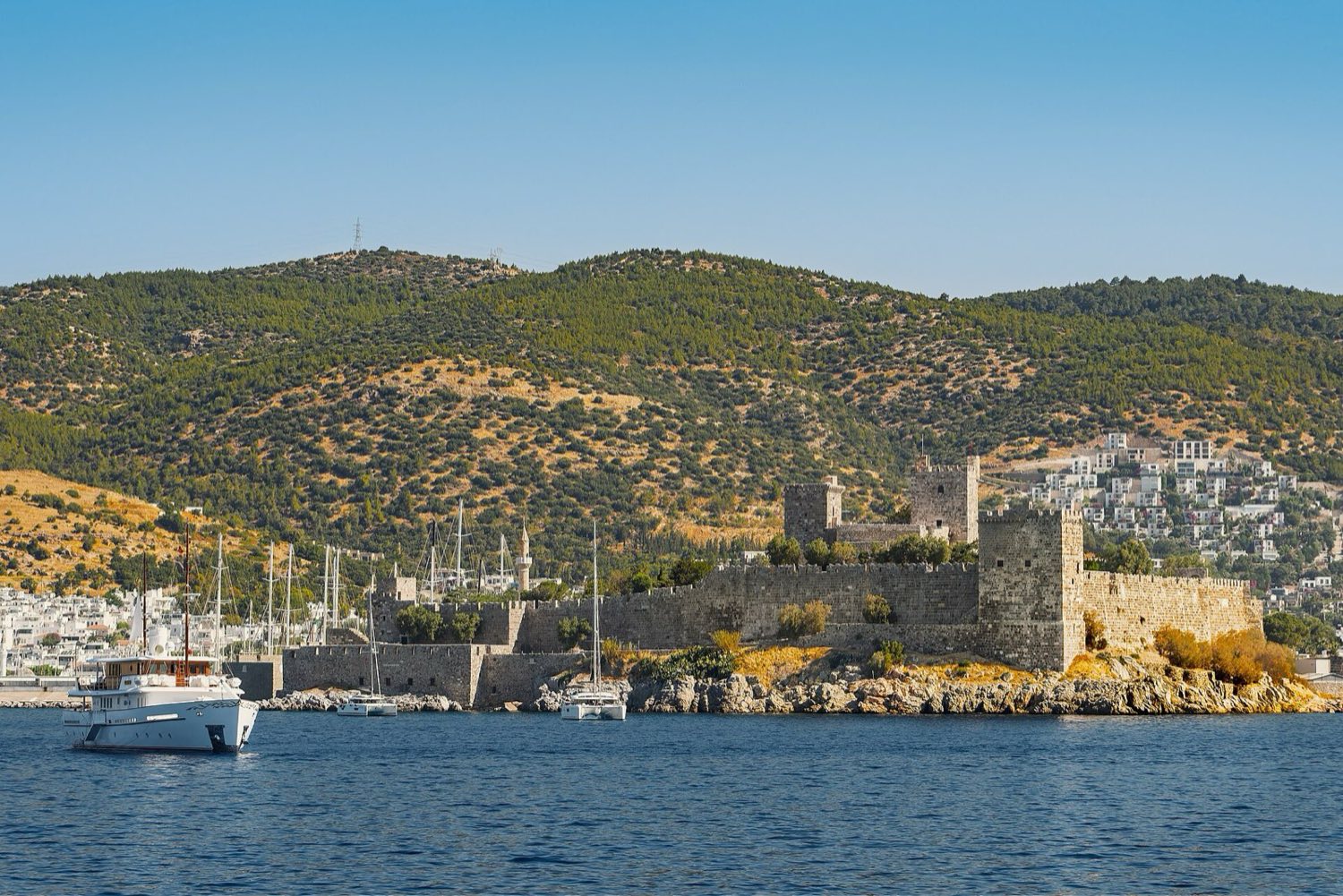
Knights of St John quarried its marble for the castle you walk into off the ferry.
That castle is why a Kos visitor feels an odd familiarity in Bodrum. The Knights of St
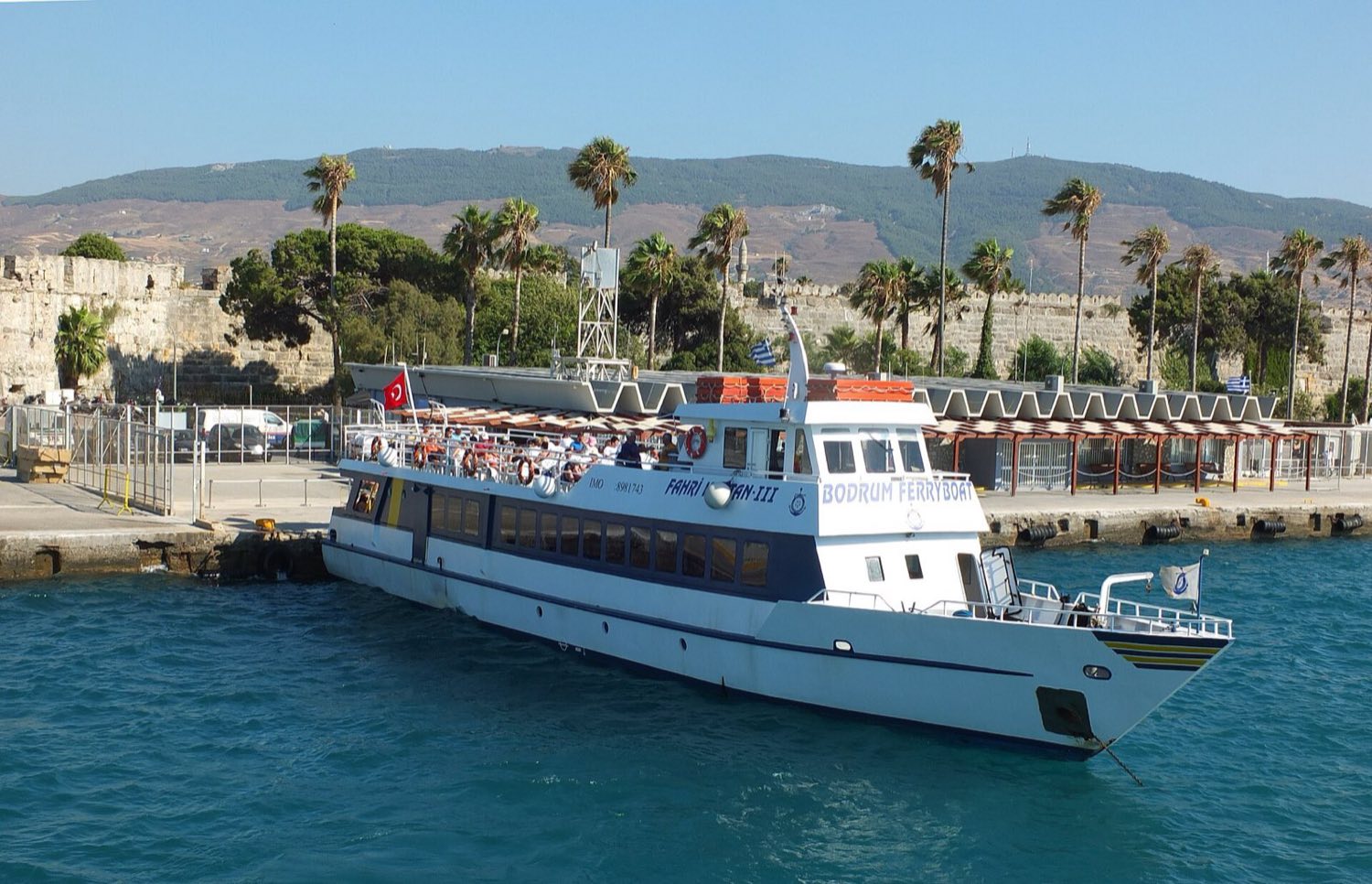
John fortified both shores of this strait, and Neratzia Castle at the
mouth of Kos Town harbour is its sibling: same order, same era, same water. Two castles, two
countries, twenty minutes apart.
The modern difference is political, not geographical. Greece joined the EU and the Schengen
area; Turkey did not. That single fact turns a twenty-minute boat ride into a border crossing
with passport control, a customs allowance and a visa question — and explains why prices and
menus feel so different for such a short hop.
Bodrum itself is no museum town: a working Aegean resort city with a yacht-building trade that
still uses hand tools. Five hours shows the historic core and nothing else — a fair argument for
the overnight. If Turkey is not for you, the Nisyros volcano day
trip is the other great off-island day from Kos, the ferry guide
explains the Greek routes, and the excursions overview compares every
format. Start at the Kos boat trips home page.