Context
How patients were actually treated at the Asklepion
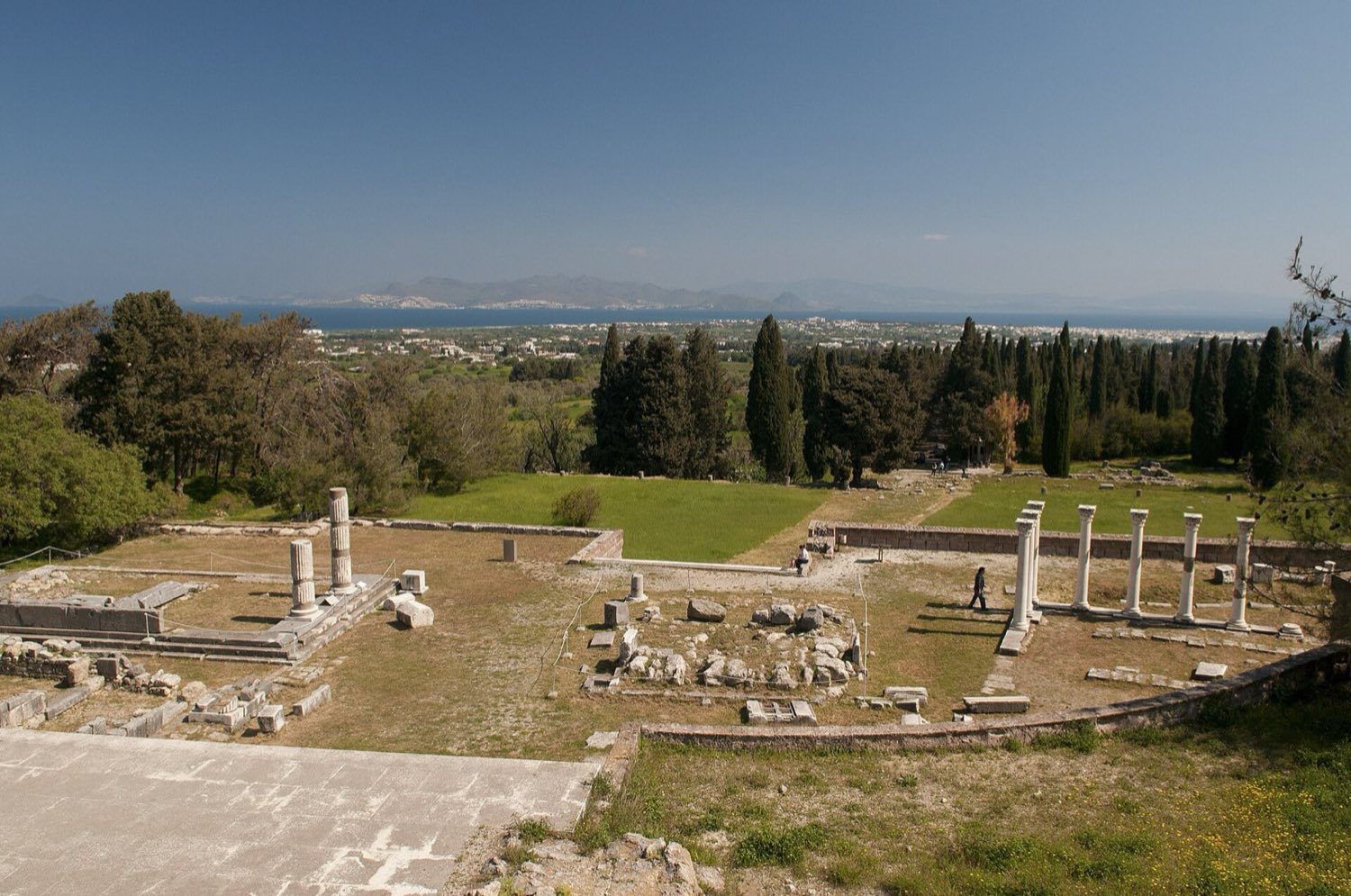
Asclepius was the Greek god of healing, and a sanctuary dedicated to him — an
asklepieion — worked as a cross between temple, hospital and spa. Several hundred
existed across the Greek world; the one on Kos became among the most important. It was founded
after the death of Hippocrates, the physician born on this island in the 5th
century BC whose treatment of disease as something with natural causes and observable patterns
underpins the Western medical tradition.
The treatment itself was not what a modern visitor expects. A patient was first
prepared: washing in the spring water, a change of diet, rest, prescribed
exercise. Offerings came next. Only then the central ritual — incubation, in
which the patient slept in a hall inside the sanctuary expecting the god to appear in a dream.
The priests, who were also the physicians, interpreted that dream and turned it into
instructions: bathe here, eat this, walk that far.
Strip out the theology and much of it is recognisable. Rest, clean water, controlled diet,
graded exercise and an authoritative figure taking your case seriously will improve a large
share of chronic complaints. The sanctuary added technique on top — setting bones, dressing
wounds, written case observation — and grateful patients left inscribed dedications and
anatomical votives, which is how we know what they arrived with. It was also a school, and the
tradition of observation, prognosis and the ethics that survive as the Hippocratic Oath ran on
here for centuries before feeding into Alexandria and then Rome.
Then it stopped. Earthquakes damaged the complex in late antiquity, the cult was abandoned
under Christianity, and in the 15th century the Knights of St John quarried
the dressed stone for their castle at the harbour mouth — which is why ancient masonry turns
up inside Neratzia Castle. Systematic excavation began in the early
20th century and the standing columns were re-erected then. It is an honest reconstruction:
a plan you read on the ground, not a rebuilt temple.
That is the case for climbing it. Kos is an island of beaches and
boat trips, and this hillside is the one place that explains why it appears in
the history of medicine at all. Give it 90 minutes early, then get in the sea.