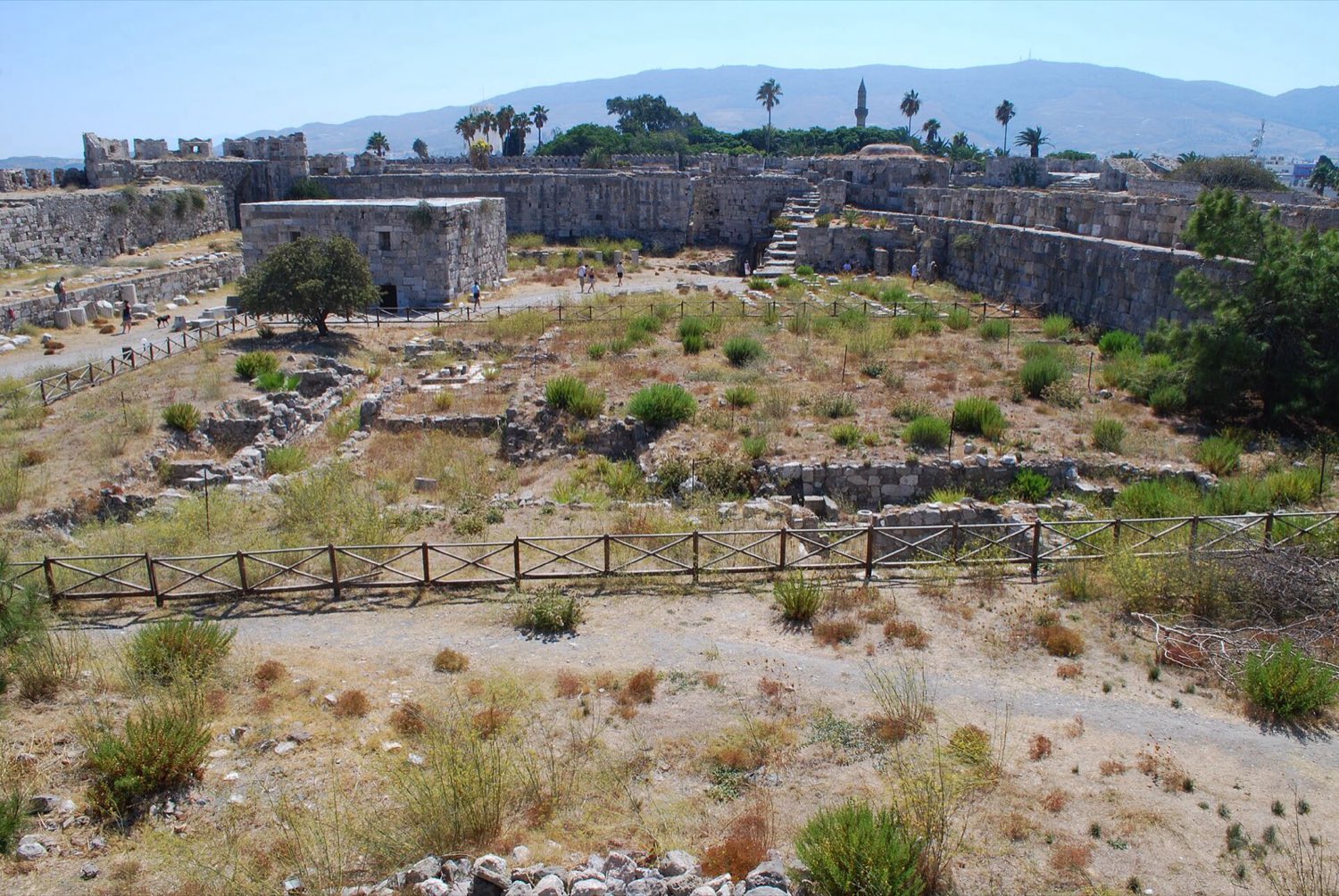
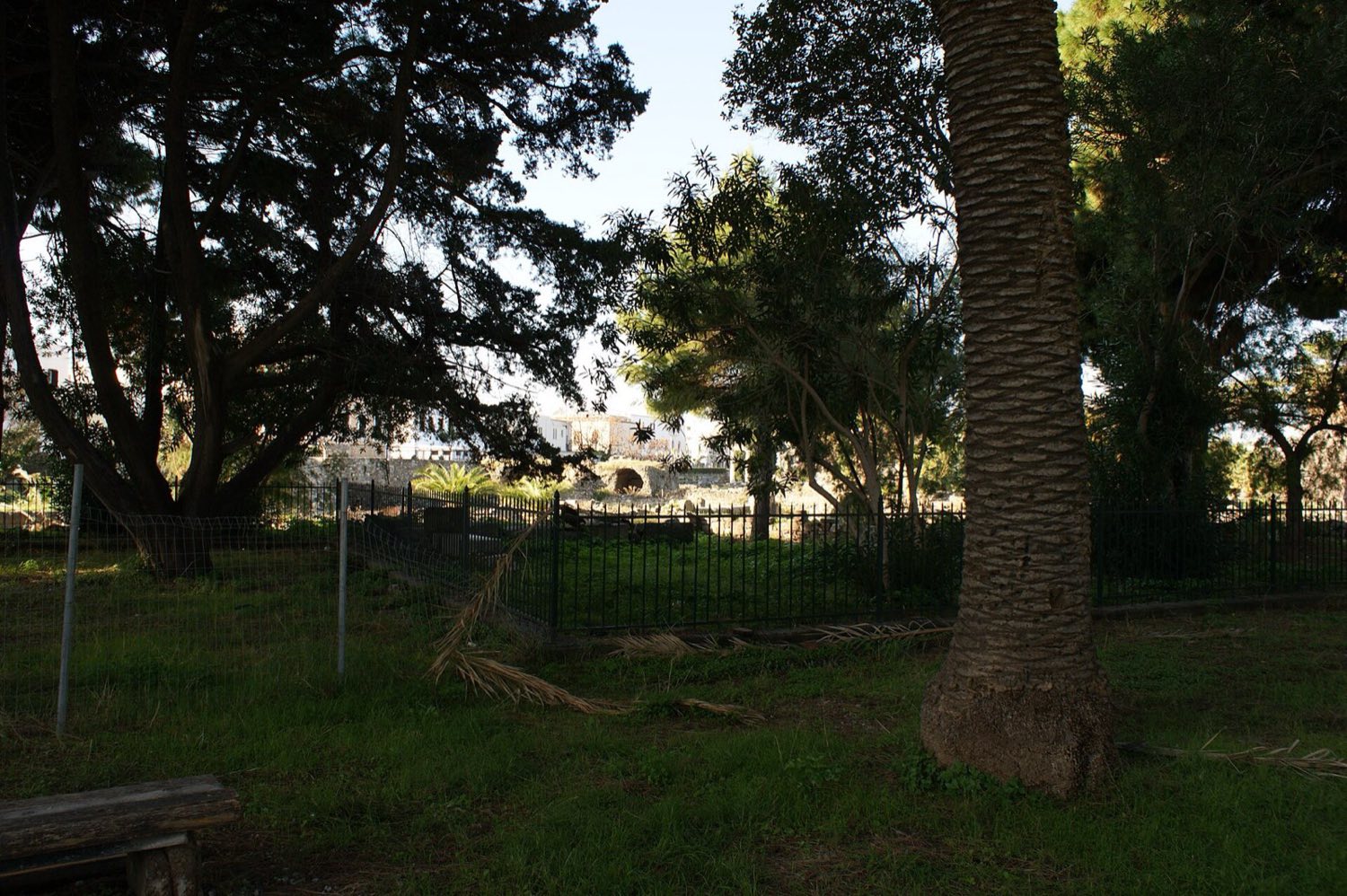
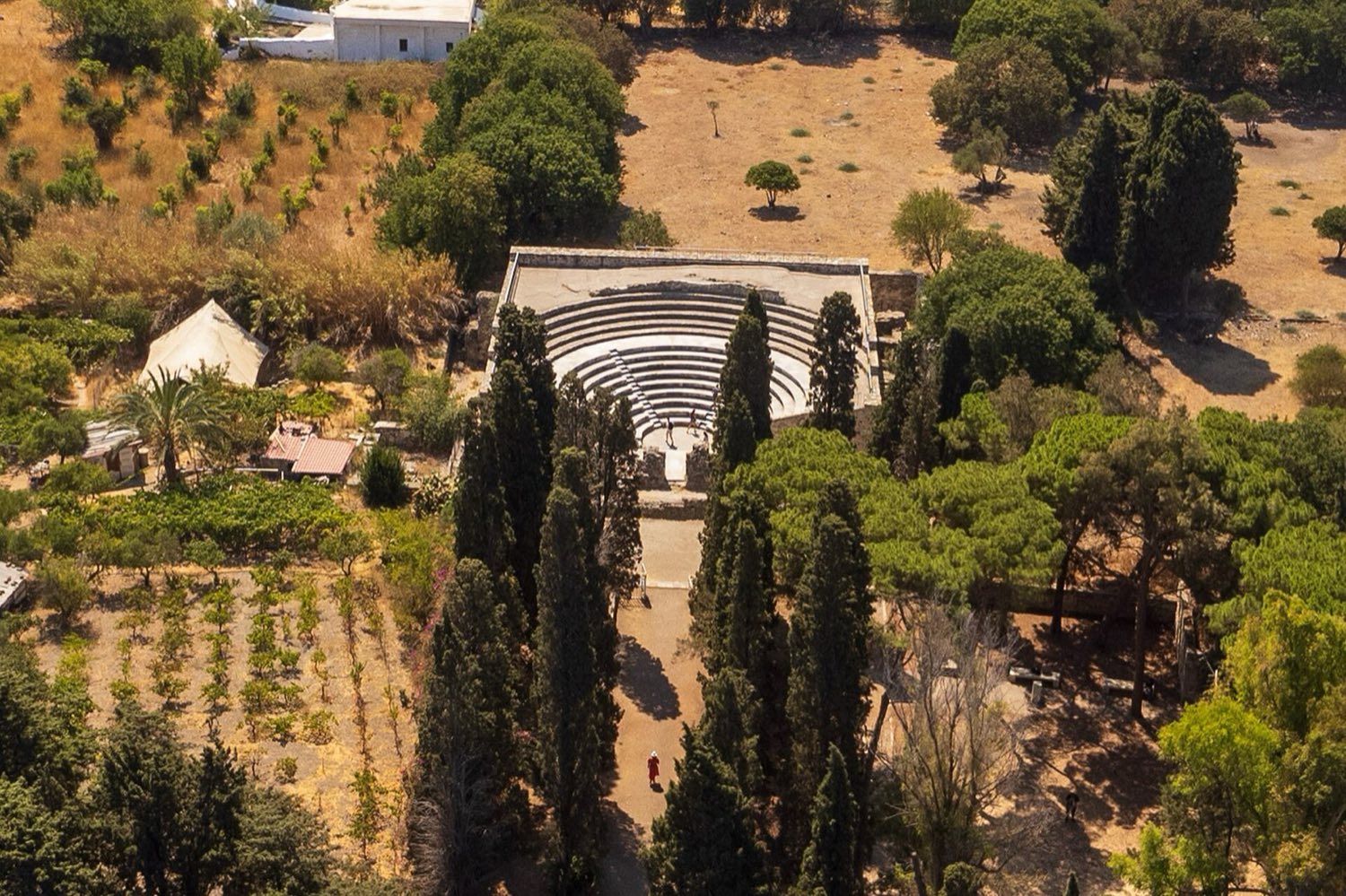
Neratzia Castle of the Knights of St John guarding the harbour mouth at Kos Town
Kos Town · Dodecanese · Half-day walking route

Kos Town: The Half-Day Route Through the Ruins

Kos Town is the rare Greek island capital where the ancient city is not up a hill — it is in the middle of the modern street grid, open to the air, because an earthquake in 1933 flattened the town above it. Eight stops, roughly 2.5 km on the flat, in an order that actually works.

8
Stops on the route
~2.5 km
Total walking, all flat
1933
Earthquake that exposed the ruins
3–4 h
Time to allow with stops

Bookable now

Kos Town tours, cruises and tickets with live availability

What you're seeing: real departures for the coming weeks, pulled from GetYourGuide. Almost everything on this list leaves from Kos Town itself — sort by duration or price, then open the listing for the operator's own terms.

Powered by GetYourGuide

Quick summary

Kos Town at a glance

The practical answers first. Entrance fees and opening hours for the state-run sites are set nationally and change by season, so we point you at the source rather than print a number that will be wrong by next spring.

Tour prices reflect operator listings on GetYourGuide for the current season. Site fees and hours: see the citation below.
Guided old town walk from Small-group walking and archaeology tours are among the cheapest things sold on Kos — typically the €20–45 band per adult for 1.5–3 hours.
Site entrance fees The Archaeological Museum and Casa Romana are state-run and ticketed. Check the current fee and hours on the official listing before you go — see the citation below.
Free to walk into The Ancient Agora and the open excavation ground around it are public archaeological space you can walk through. Confirm on arrival — access changes with restoration work.
Advance booking needed? No for the walk or the sites. Worth it for a guided tour in July–August, when small groups fill a day or two ahead.
Time to allow 3–4 hours for the eight-stop route with two ticketed interiors. 90 minutes if you only want the castle, the plane tree and the Agora.
Walking distance Roughly 2.5 km end to end, entirely flat. The old-town lanes are paved, not cobbled goat track — a buggy manages.
Busiest hours 10:00–13:00 on cruise-ship days, concentrated at the castle bridge, the plane tree and the harbour end of the Agora.
Bikes Kos Town is flat with separated cycle lanes. Rental shops are everywhere and a bike beats a bus for anything within 5 km of the centre.
Parking Central on-street bays are pay-and-display in season. Park once at the edge of the centre and walk — the route is a loop.

For current opening hours, entrance fees, reduced rates and free-admission days at the Archaeological Museum of Kos, Casa Romana and the Castle of the Knights, use the Greek Ministry of Culture's own monuments and museums listing at odysseus.culture.gr. We deliberately do not reproduce those figures — they change, and a stale number costs you a wasted journey. How we source and date our figures.

Standing columns and excavated walls of the Ancient Agora in the centre of Kos Town
The Ancient Agora, open to the sky between the harbour and Eleftherias Square. No fence, no gate, no ticket desk.

Why the ruins are just… there

On 23 April 1933 an earthquake destroyed most of Kos Town. The island was then under Italian administration, and the rebuild gave Italian archaeologists a cleared site to dig. Rather than build back over the ancient city, they excavated it and left it open. That is why you walk past 2,300-year-old columns on the way to a bakery.

The walking route

Eight stops in Kos Town, in the right order

Start at the harbour mouth and work inland and south. Done in this order the route never doubles back, and you reach the two indoor, ticketed stops in the middle of the day when the open ground is at its hottest.

  1. 1 · Neratzia Castle

    The Knights of St John held Kos from the early 14th century until the Ottomans took it in 1523, and this is what they left: a double-walled fortress on the point that closes the harbour mouth. Reach it by the stone bridge from Platanou Square, not from the quay. Parts of the interior have been closed for restoration in recent years — check before you build your morning around it.

  2. 2 · The Hippocrates plane tree

    At the town end of that bridge, in Platanou Square, a huge plane tree props its branches on iron scaffolding beside an Ottoman fountain of recycled ancient marble and the 18th-century Gazi Hassan Pasha Mosque. Tradition says Hippocrates taught in its shade; it is commonly put in the region of 500 years old, not 2,400. A living local legend rather than a relic.

  3. 3 · The Ancient Agora

    Drop off the square into the excavated harbour quarter of the ancient city: colonnade stumps, Hellenistic and Roman walls, the footprint of an early Christian basilica and temple foundations near the water. It is open ground you walk into, and the best single place in town to understand how the modern street grid sits on top of an ancient one.

  4. 4 · Eleftherias Square

    Cut inland to the town's civic square: the Italian-built covered market on one side, the Archaeological Museum on another, and the Defterdar Mosque in the corner. Everything from here is a five-minute walk. Good coffee stop, and the shaded arcades are the only real shade on the route.

  5. 5 · Archaeological Museum

    A small, genuinely worthwhile museum in a 1930s Italian building on the square, holding the sculpture and mosaics lifted from the town and from the Asklepion — including a floor mosaic showing Hippocrates receiving Asclepius. Forty minutes is enough. Go in when the sun is at its worst.

  6. 6 · Defterdar Mosque

    The 18th-century Ottoman mosque on Eleftherias Square, with its minaret over the cafés. It is a working religious building, not an exhibit — look, don't wander in during prayers, and dress as you would for any church. Together with the mosque by the plane tree it is the clearest trace of the four centuries of Ottoman rule between the Knights and Italy.

  7. 7 · Casa Romana

    About 600 m south of the square, a large third-century AD Roman townhouse, reconstructed and roofed by the Italians and now presented as a museum: three courtyards, mosaic floors and wall painting. Ticketed, and the one stop that shows you how the wealthy actually lived here rather than where they shopped.

  8. 8 · Roman Odeon

    Directly across from Casa Romana, a small covered concert theatre with its lower rows of marble seating restored in the Italian period. It is the one ancient building in town that still does what it was built for, hosting occasional summer performances. The western excavation area beyond it — Roman road, baths, re-erected gymnasium columns — is a free 20-minute add-on.

There is almost no shade on this walk

The Agora, the western excavation area and the Odeon are all open, unshaded ground with pale stone that throws heat back at you. In July and August start at 08:30 and be inside the museum by 11:30, or start at 17:00 and finish in the dark. Doing it at 13:00 is how people give up halfway.

Compare the options

Walk it, ride it or take a guide

There is no combined town ticket to weigh up, so the real choice is how you cover the ground — and whether you want someone to explain what you are looking at.

Best value

Option 1

Self-guided walk

Free + two site tickets


  • The eight-stop route above, 3–4 hours
  • Agora and western excavations cost nothing
  • Stop for coffee whenever you like
  • Signage at the open sites is thin
  • Nobody to tell you which wall is which

Pick this if you're comfortable reading a site yourself, or you're doing this on a rest day between beaches and boats.

Option 2

Guided walking tour

€20–45 / adult, 1.5–3 h


  • Small groups, licensed guides
  • Turns rubble into a story in one hour
  • Often bundled with the Asklepion
  • Morning departures, before the heat
  • Site entrance fees usually extra

Pick this if the difference between Hellenistic and Roman masonry matters to you, or you have one day in town and want it to land.

Option 3

By bike

Day hire / bike


  • Separated cycle lanes across the whole town
  • Adds Lambi, Psalidi and the Asklepion road
  • Flat — no hill until you leave town
  • Faster than the bus for anything under 5 km
  • You'll be locking it up at every stop

Pick this if you want the town plus a swim, or you're staying out at Lambi or Psalidi and would rather not wait for a bus.

The cycle-lane reality

The network is genuinely good by Greek island standards — separated lanes along the waterfront, north to Lambi, east towards Psalidi and inland towards the Asklepion. Two caveats: scooters use the lanes as overtaking room, and lanes end abruptly at junctions where you rejoin traffic. Helmets are rarely supplied, so ask.

Narrow paved lane with tavernas and shopfronts in the old town of Kos
Two streets back from the water the prices drop and the menus lose their photographs.

Timing

When to walk, and when the crowds land

The cruise-passenger window

Cruise ships berth at the commercial quay a few hundred metres from the castle, and their passengers walk. The crush is predictable: ashore from mid-morning, heaviest between 10:00 and 13:00, thinning sharply by mid-afternoon as everyone reboards. It concentrates in a small area — the castle bridge, Platanou Square and the harbour end of the Agora.

You do not need to avoid those days, only those hours. Walk the route at 08:30 and you will have the Agora to yourself; walk it at 17:00 and the ships have gone.

Best months

  • April–May — the best time for a walking day. Everything open, nothing crowded, and the excavations still have green between the stones.
  • June and September — hot but manageable if you go early. September evenings in town are the pleasantest of the year.
  • July–August — the ruins are punishing between 11:00 and 17:00. Do town in the early morning and go to the beach in the middle of the day.
  • Winter — the town keeps working, the sites stay open on shorter hours, and you'll have them alone. Boat trips, however, stop.

Wind, of all things

The northerly meltemi that spoils north-coast beaches is an asset here. It funnels along the harbour and the waterfront promenade, which makes the front the one genuinely cool place in town on an August afternoon — and makes the inland squares, where the ruins are, noticeably hotter than the temperature suggests. Plan the exposed stops for the windier hours.

Best light

Shoot the castle and harbour in the first hour after sunrise from the marina-side quay, when the water is flat and the walls take the low light. The Agora columns work best in the last hour before sunset, and the old-town lanes are better at dusk than at any point during the day.

The evening promenade

From about 19:30 the waterfront fills with a slow walk in both directions — families, prams, teenagers, ice cream. It costs nothing, it is the most Greek hour of the Kos day, and it is the easiest way to work out which restaurants locals actually go into.

Harbour or back street

Where to eat in Kos Town, and where not to

Kos Town's dining splits cleanly into two zones, and the difference is roughly a hundred metres of walking. The harbour front gives you the boats, the castle and the sunset, and charges for the view. The back streets — the lanes inland of the Agora, the streets behind Eleftherias Square and the blocks around the covered market — give you the same food for noticeably less.

Three signals you're in a tourist-trap taverna

  • A host standing on the pavement with a menu, inviting you in. Places locals eat at do not need to.
  • Photographs of the food on the menu, and the menu translated into six languages.
  • A prime sea-front table with an empty dining room behind it — the position is doing the selling.

None of those proves bad food, and one or two harbourfront places are genuinely good. The better test works the other way round: a short handwritten menu, Greek families still eating after 21:00, and fish priced by the kilo so it is weighed in front of you.

Ordering like you've done it before

Greeks eat late — a taverna at 20:00 is half empty and at 22:00 is full. Order mezze to share rather than a course each. Bread and a cover charge appear on most bills as standard, and tipping is appreciated rather than expected. More on dishes and winery visits in the wine, olive oil and food guide.

After dinner

The bars around Nafklirou and Diakon streets, two blocks off the harbour, are where the town's drinking happens — compact, loud, and starting properly after 23:00. Easy to find, and easy to book a hotel two streets away from. See the Kos nightlife guide.

How to save

Seeing Kos Town cheaply

Most of it is already free

The Ancient Agora, the western excavation area with its Roman road and gymnasium columns, Platanou Square, the plane tree, the mosques from outside and the whole waterfront cost nothing. You can do a genuinely substantial three-hour history walk in Kos Town without buying a ticket at all. The paid element is two interiors — the museum and Casa Romana — plus the castle when it is open.

Reductions and free days

Greek state museums and archaeological sites operate reduced admission for some age groups and a number of free-admission days across the year, and the rules are national rather than local. Bring photo ID if you expect a reduction; staff do ask. The current bands and dates are published by the ministry — check them rather than trusting a blog, including this one.

Ask about a combined ticket

Combined tickets covering several state sites exist in Greece and their scope changes. If you plan to see the museum, Casa Romana and the Asklepion, ask at the first ticket desk you reach whether one is currently sold for the Kos sites — it takes ten seconds and can pay for lunch. There is no island-wide Kos sightseeing pass, and anything marketed as one is not official.

Skip the taxi

The whole route is walkable and flat, and a day's bike hire costs less than two short taxi rides. If you're arriving from the airport, compare your options on the airport transfers page before you join the rank.

What costs money in Kos Town and what doesn't
StopTicket?
Ancient AgoraOpen access
Western excavation areaOpen access
Hippocrates plane treeOpen access
Eleftherias Square & marketOpen access
Defterdar Mosque, from outsideOpen access
Roman OdeonCheck on arrival
Archaeological MuseumTicketed
Casa RomanaTicketed
Neratzia CastleTicketed; sections may be closed

Ticketing status is our own observation and is subject to change with staffing and restoration programmes; fees and hours are not reproduced here on purpose. Verify at odysseus.culture.gr before you travel.

How to get there

Getting into Kos Town, and parking once you're there

Kos Town sits at the island's north-eastern tip, which makes it the far end of the island from the airport and the resorts at Kefalos.

  1. From the airport

    Kos International Airport is at Antimachia, mid-island, roughly 24 km from Kos Town — 30 to 40 minutes by road. Pre-booked transfer, taxi, public bus or hire car; the trade-offs are set out on the airport transfers page.

  2. From the resorts

    Buses run into town from Tigaki, Marmari, Mastichari, Kardamena and Kefalos along the north-coast road, and town services cover Lambi, Psalidi and Agios Fokas. Kefalos is a 45-minute drive, so a town evening from there is a commitment.

  3. Arriving by sea

    The main port is right beside the old town, below the castle — ferries from Rhodes, Kalymnos and the Bodrum crossing all land within five minutes' walk of the plane tree. It is the rare Greek port where you do not need transport on arrival.

  4. Parking, honestly

    Central bays are pay-and-display in season and the free ground at the edges of the centre fills by mid-morning in summer. Do not circle: park at the first edge-of-centre space you see and walk in. The route is a loop, so you return to your car anyway.

The way into the castle nobody finds

Visitors regularly walk the harbour quay looking for a castle gate at sea level. There isn't one. The entrance is reached from Platanou Square, across the stone bridge that spans the palm-lined avenue below — which means the plane tree and the castle are a single stop, and you should do them together rather than twice.

Context

Five layers of Kos Town, and the earthquake that revealed them

Kos Town has been the island's port since antiquity, founded as the new capital of Kos in 366 BC and prosperous enough by the Hellenistic period to build the colonnaded quarter you now walk through. It was a working Greek city in the age of Hippocrates, whose Asklepion sits in the hills 4 km behind it, and a wealthy Roman provincial town after that — Casa Romana and the Odeon are the Roman town's surviving domestic and civic set pieces.

Then come the layers that changed the skyline. The Knights of St John, based on Rhodes, held Kos from the early 14th century and fortified the harbour mouth against the Ottoman advance; Neratzia Castle is their double-walled answer, and much of its bulk is built from recycled ancient marble taken from the ruins around it. The Ottomans took the island in 1523 and stayed almost four centuries, leaving the two mosques and the fountains. Italy took the Dodecanese in 1912 and administered Kos until the Second World War.

On 23 April 1933 an earthquake destroyed most of the town. That catastrophe is the reason Kos Town looks the way it does. The Italian administration rebuilt to a new plan — wide avenues, arcaded squares, the covered market on Eleftherias Square, the Archaeological Museum — and simultaneously handed its archaeologists an unrepeatable opportunity: a flattened city centre with the ancient one directly beneath. They excavated the harbour quarter and the western zone through the 1930s and, instead of building over them again, laid the new town out around them.

The result is unusual. Most Mediterranean towns hide their ancient core under later building; Kos put a fence-free archaeological park in the middle of its shopping district — which is both why it photographs so well and why restoration work is permanent. Walk the route once with that in mind and the town stops being scattered sights and becomes one legible city. Then take it further: up to the Asklepion, out to the beaches, or onto the water from the quay you started on, using the boat trips guide or the island hub.

FAQ

Kos Town: common questions

How long do you need in Kos Town?

Half a day covers it properly. Allow three to four hours for the eight-stop route with the Archaeological Museum and Casa Romana included, or about 90 minutes if you only want the castle, the plane tree and the Ancient Agora. The whole walk is roughly 2.5 km on flat ground, so the limiting factor is heat rather than distance.

Why are there Roman ruins in the middle of Kos Town?

Because an earthquake on 23 April 1933 destroyed most of the modern town. Kos was under Italian administration at the time, and the rebuild gave Italian archaeologists a cleared city centre with the ancient city directly beneath it. They excavated the harbour quarter and the western zone through the 1930s and laid the new town out around the excavations instead of building over them.

Can you go inside Neratzia Castle?

It is a ticketed site, but sections of the interior have been closed for restoration in recent years and access has varied from season to season. Check the current position on the Greek Ministry of Culture listing before you plan a morning around it. The entrance is reached by the stone bridge from Platanou Square, not from the harbour quay.

Is the Hippocrates plane tree really 2,400 years old?

No. Hippocrates was born on Kos in the 5th century BC and tradition says he taught in the shade of a plane tree on this spot, but the tree standing in Platanou Square today is far younger — commonly put in the region of 500 years. It is genuinely enormous and its branches are supported on scaffolding. Treat it as a living local tradition rather than an artefact.

Is Kos Town good for cycling?

Unusually good. The town is flat and has an extensive network of separated cycle lanes running along the waterfront, north to Lambi, east towards Psalidi and inland towards the Asklepion. Rental shops are everywhere and a bike beats the bus for anything within about 5 km. Two warnings: scooters use the lanes, and lanes end abruptly at some junctions.

When do the cruise-ship crowds arrive in Kos Town?

Passengers come ashore from mid-morning, and the crush falls between roughly 10:00 and 13:00 before thinning sharply in the afternoon. It concentrates in a small area — the castle bridge, Platanou Square and the harbour end of the Ancient Agora. Walking the route at 08:30 or from 17:00 avoids it entirely, even on a busy ship day.

Where should I eat in Kos Town?

Walk one or two streets back from the harbour front. The lanes inland of the Ancient Agora, the streets behind Eleftherias Square and the blocks around the covered market charge noticeably less for the same food. Avoid places with a host on the pavement, photographs on the menu or a prime sea-front table and an empty room behind it. Greeks eat from about 21:00, so a full dining room late is the best signal there is.

Where do you park in Kos Town?

Central on-street bays are pay-and-display in season and the free ground around the edge of the centre fills by mid-morning in summer. The practical approach is to take the first edge-of-centre space you find and walk in, because the walking route is a loop that returns you to the car. Better still, leave the car and use a bike.

Let someone explain Kos Town for you

Licensed guides turn the Agora from a field of stones into an afternoon that makes sense. Check live availability for old-town walks and archaeology tours on GetYourGuide, the authorised reseller we link to throughout this guide.